– Clipping
02/05/2026 1:07 pm – Updated Now
3 Min
Internal Pages – Super (728×90) – Position 1
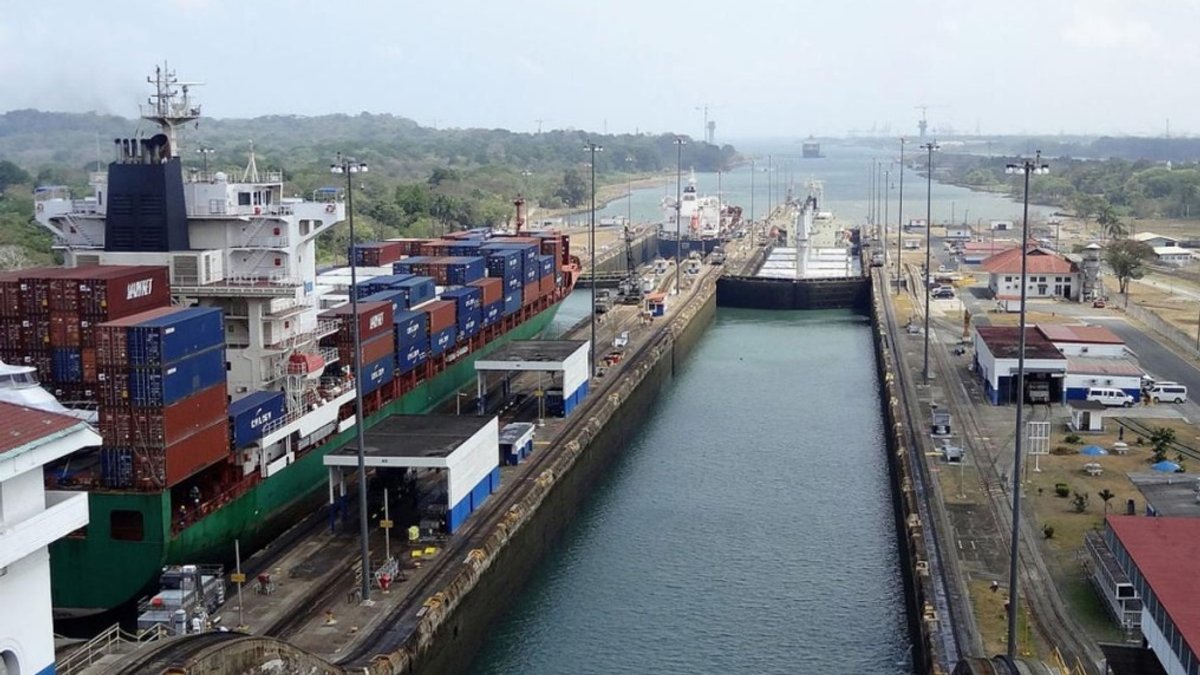
illustrative photo
Click here to Read the Summary
The Panama Ports Company initiated international arbitration proceedings against Panama, alleging breach of contract following a court decision that annulled its concession in the ports of Balboa and Cristóbal. The company asks for full compensation and claims that it suffered targeted actions from the State.
The Chinese Panama Ports Company (PPC) announced that it initiated, on February 3, an international arbitration process against the Republic of Panama, based on the concession contract for the exploration of the ports of Balboa and Cristóbal and the Arbitration Rules of the International Chamber of Commerce.
Internal Pages – Super (728×90) – Position 14
The initiative follows a decision by the Panamanian Supreme Court that considered the legal framework that authorized the transfer of the terminals to be unconstitutional, annulling the contract that allowed PPC, a subsidiary of the Hutchison Ports group, to operate strategic facilities located on opposite sides of the Panama Canal.
According to the company, the court decision is part of a campaign led by the Panamanian State specifically against PPC and its concession contract. The company claims that abrupt and targeted actions resulted in serious damage and imminent additional risks, without similar measures having been adopted against other port contracts in force in the country.
PPC states that, before resorting to arbitration, it made extensive efforts to avoid disputes, maintain its normal operations and cooperate with Panamanian authorities. However, he maintains that the State has repeatedly ignored communications, requests for consultation and requests for clarification.
In its claim, the company highlights that the concession contract is supported by a legal framework in force for almost three decades, designed to guarantee legal certainty and long-term respect for contractual rules. In this context, PPC states that the Republic of Panama has violated both the contract and applicable legislation and that it will seek full compensation, calculated based on relevant financial data, in addition to other complementary legal measures.
As part of the conflict, the company claims that the Panamanian State reversed historical positions on the concession’s legal framework and promoted or supported legal proceedings with the aim of invalidating the contract, which, according to PPC, resulted from a transparent international bidding process.
The company also criticized a statement released by the Panamanian Judiciary on January 29, 2026, classifying it as irregular. The text is related to a decision that declared a 1997 law unconstitutional, considered by the PPC to be contradictory in relation to previous understandings of the Supreme Court on similar contracts and which, according to the company, has not yet been officially published or entered into force.
After the court decision, the PPC states that the State began to implement measures to take control of operations, including unexpected visits and demands for unrestricted access to physical, commercial and intellectual infrastructure, as well as information and employees, in the context of a supposed port transition plan coordinated by state authorities.
Despite the scenario, the company states that it continues to operate normally and request coordination mechanisms. PPC emphasizes that it has made investments in Panama that exceed those of any other port operator, generating thousands of direct and indirect jobs and contributing to consolidating the country as a logistics hub of global relevance. The company reiterated its request for clarification and consultation with the Panamanian State while the international arbitration process progresses.
Inner Pages – Super (728×90) – Position 13