Portal do Mar
03/12/2026 1:18 pm – Updated 7 hours ago
2 Min
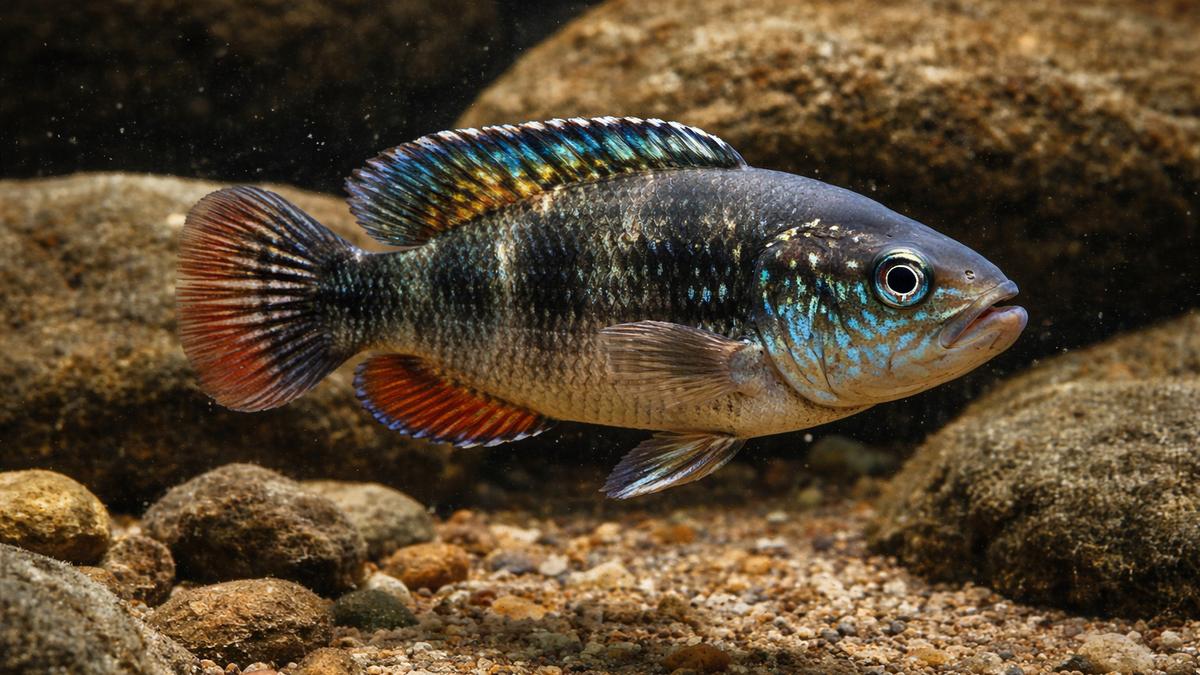
When we talk about Hormuz, we almost always think about oil, ships and geopolitical tension. But the region is also linked to a much lesser-known species: Iranocichla hormuzensis, a small fish native to southern Iran, associated with freshwater and brackish water habitats above the Strait of Hormuz.
Internal Pages – Super (728×90) – Position 14
It is a cichlid endemic to that area and one of the most unique species of the local fauna. Far from the maritime environment that the name might suggest, this species lives in warm, shallow watercourses, in areas linked to the Mehran River drainage. Its habitat includes brackish areas and also inland waters with harsh conditions, which makes it an example of adaptation to peripheral and undervalued, but biologically relevant, ecosystems.
Iranocichla hormuzensis is a small fish, measuring approximately 10 centimeters in length, and is also distinguished by its reproductive behavior. It is a maternal oral incubator species, that is, the female protects eggs and larvae in the mouth during the initial phase of development, a strategy that increases the survival of the offspring in a demanding environment. For many years, it was considered the only species in the genus Iranocichla, but later work showed that there is greater diversity in these populations in southern Iran. Still, hormuzensis maintains its own relevance because it is associated with the Mehran drainage and because it represents a rare lineage in a region where cichlids are very uncommon.
More than a scientific curiosity, this species reminds us that the area around Hormuz is not only strategically important for world trade. It also contains some ecological value and a biodiversity of its own, sometimes discreet, but unique enough to deserve attention. In a territory so often reduced to maps of conflict and energy routes, Iranocichla hormuzensis shows that there is also life, adaptation and ecological fragility in the shadow of one of the most sensitive straits on the planet.
This post was generated from information in the original feed. Credits and reference to the source were included at the end of the text.
Source:
Rectangle Indoor Banner (600×250) – Position 13
SOURCE: