Portal do Mar
03/22/2026 08:21 am – Updated Now
2 Min
Long before the Strait of Hormuz became synonymous with energy tension, a threat to navigation and global geopolitical risk, Portugal was already well aware of the strategic weight of that passage.
Internal Pages – Super (728×90) – Position 14
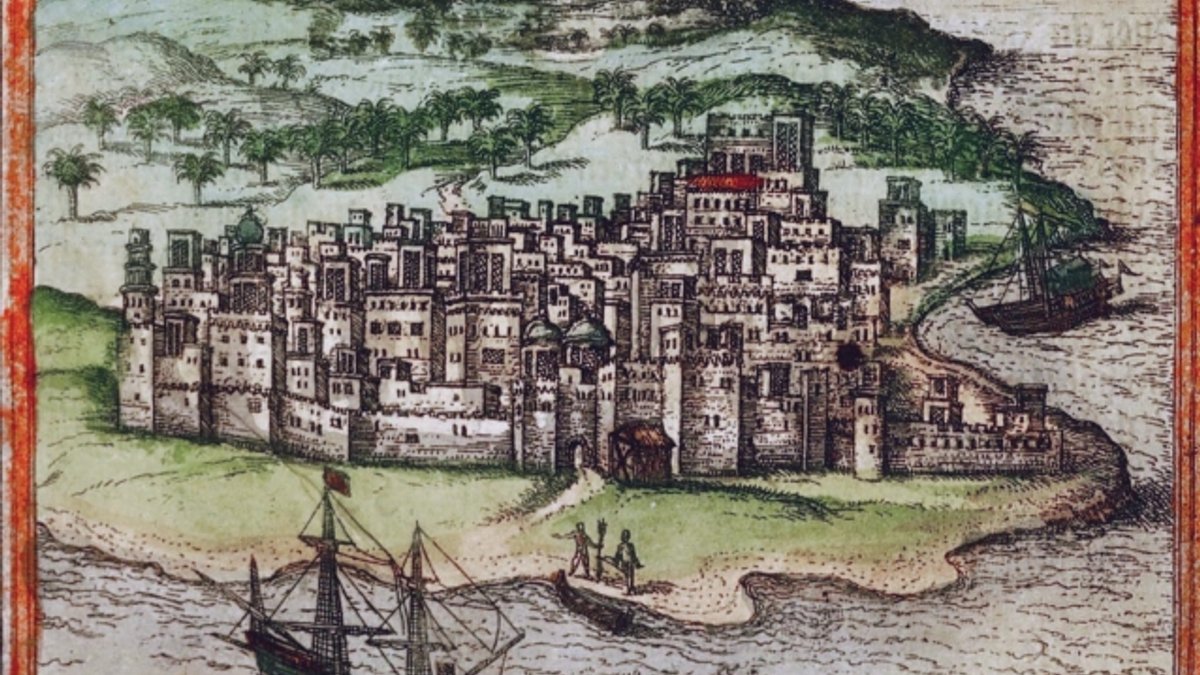
At the beginning of the 16th century, the Portuguese arrived in Hormuz and quickly realized what the world continues to confirm in 2026: whoever controls that strait touches one of the central nerves of international maritime trade. The Portuguese presence gained military expression with the conquest of Hormuz by Afonso de Albuquerque in 1507, later consolidated in 1515, in an effort to assert influence over the entrance to the Persian Gulf and over trade routes between Asia, the Middle East and Europe. Hormuz’s importance was not just regional. It was, even at that time, a key to maritime, fiscal and military circulation.
Portugal realized this early and tried to transform this position into effective power, including the construction of the fortress of Nossa Senhora da Conceição, a symbol of the Portuguese presence on that strategic island. Portuguese rule would end in 1622, when Persian forces, supported by the English, put an end to this cycle. Five centuries later, the underlying logic remains almost intact. The Strait of Hormuz remains one of the most decisive maritime bottlenecks on the planet and is described by the US Energy Information Administration as the most important oil transit point in the world. In 2024, around 20 million barrels per day passed through there, and the EIA itself highlights that a very relevant part of the world’s oil and a significant portion of the global trade in liquefied natural gas depend on this passage.
This is why any threat, military incident, partial blockade or simple verbal escalation in Hormuz immediately impacts markets, freight, maritime insurance and global risk perception. The current situation thus confirms what Portuguese history had already demonstrated more than 500 years ago: Hormuz is not just a strait. It is a point where geography, naval power and the world economy intersect in a brutal way.
This post was generated from information in the original feed. Credits and reference to the source were included at the end of the text.
Source:
Rectangle Indoor Banner (600×250) – Position 13
SOURCE: