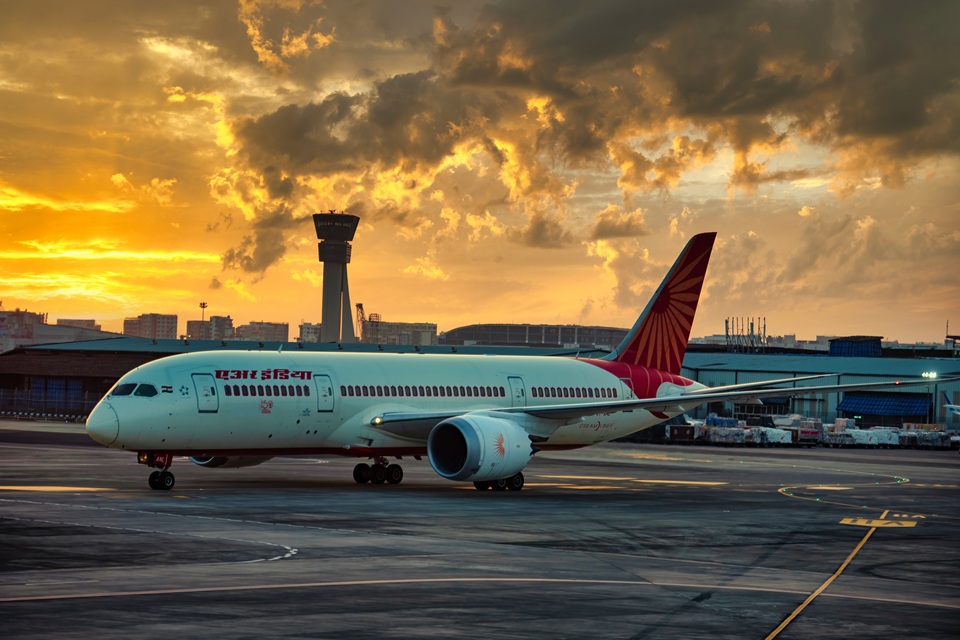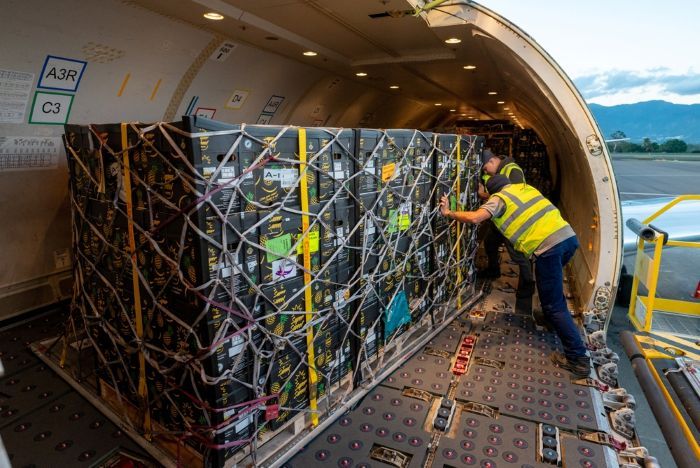



Things were going just fine in the global air cargo sector. Then the Middle East blew up.
Air cargo was well on its way to bouncing back from the cratering of demand caused by the COVID-19 pandemic — which, of course, affected every mode of transportation and corner of the global economy for several years.
In February of this year, cargo tonne-kilometers (CTKs) were up 11.1% over the same period of 2025. “There was a pretty good recovery underway,” said Andrew Matters, director of sustainability and economics for the International Air Transport Association (IATA) in Geneva, Switzerland. “The industry was growing quite strongly.”
Then came the war in Iran, and CTKs plunged in March by 4.8%. For carriers serving the Middle East, that amounted to a 54.3% decline year-over-year.
In February, the industry was expecting 5.5% growth in global air cargo capacity, said Marco Bloemen, managing director of Aeveana consultancy specializing in logistics and aviation. Instead, March brought a 9% drop.
Matters and Bloemen were addressing the annual Partnership Conference of Cargo Network Services (CNS) Corp.a subsidiary of IATA, in San Francisco. Reporting to members on the health of the industry today, they presented a mixed diagnosis.
Carriers are being hit hard by soaring fuel prices. The “crack spread” — the gap between the price of crude oil and that of jet fuel — is having “record high inflationary impacts,” Matters said. “This is not a story that gives comfort.”
Both freighters and belly capacity have suffered a significant loss in capacity, driven by fewer aircraft flying and lower utilization overall, Bloemen said. And the conflict in the Persian Gulf continues to affect global capacity growth, which will likely end the year at just 1.6% over 2025 levels.
Larger trends are also at play. Matters noted that a “sharp reorientation” of global trade was already materializing in 2025, as businesses reacted to geopolitical strife and high tariffs. U.S. imports from China fell sharply last year, but were replaced by a surge of shipments from Taiwan and Vietnam. Similarly, China’s exports to the U.S. declined, while those to Asia and Europe increased.
Not every sector is hurting. Bloemen said high-tech has given U.S. air imports a big boost, resulting in the addition of around 170,000 metric tons in just three months — the equivalent of 52 full widebody freighter flights per day. Traffic in computing and network equipment for data centers has been especially strong, growing 42% in 2025 and likely to expand even further this year. “It’s no longer a niche,” Bloemen said. “It’s a big part of the business.”
Meanwhile, e-commerce volumes have dropped by 45% in the Middle East and South Asia, and 24% in North America, the first decline in that red-hot sector in years, Bloemen said.
Matters said multiple uncertainties surrounding global trade could translate into more cautious investment by business and spending by consumers. In the face of rising inflation and oil prices, U.S. households have been running down personal savings, leaving less for discretionary purchases. All that will make it harder for air cargo carriers to determine the optimal level of capacity need to serve the market in the months ahead.
Matters called it “blindingly obvious” that the current Middle East conflict poses the “key downside risk” to near-term forecasting. But geopolitical issues in general — including continuing trade tensions and questions about future tariff levels — are combining to form an even larger threat.
The lesson for air cargo, Matters said, is that the industry must view “resilience, agility and diversification” as critical to future business success, in what amounts to a permanently unsettled business environment.
“We will have more disruptions,” Bloemen warned.