

Disclosure
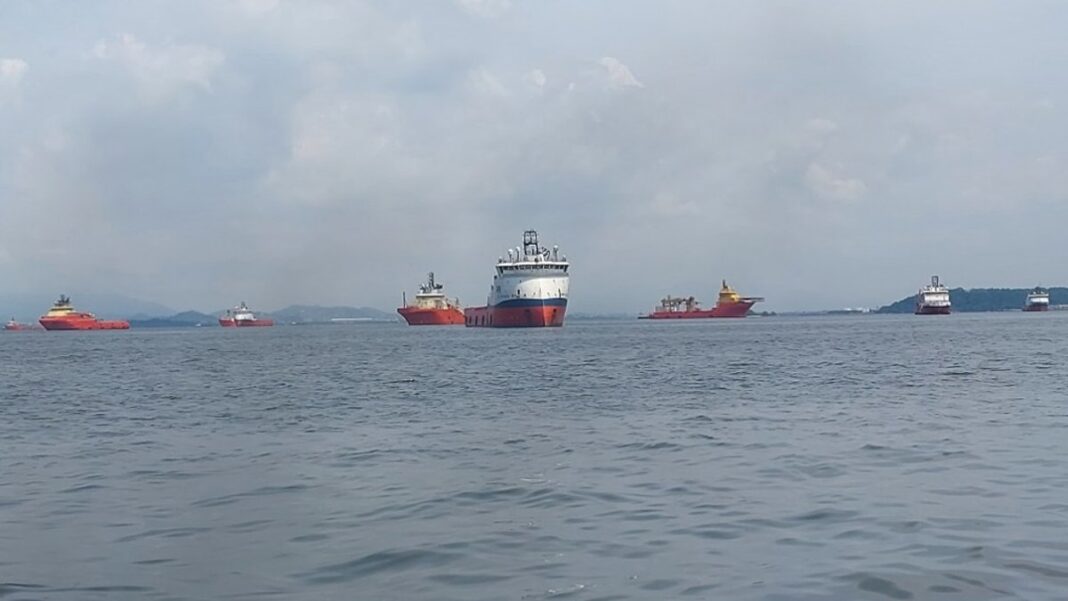
Maritime support activity in Brazil continues to present consistent indicators. According to the most recent survey prepared by the Brazilian Association of Maritime Support Companies (Abeam) and the National Union of Maritime Navigation Companies (Syndarma), the fleet in operation in Brazilian Jurisdictional Waters (AJB) remains above 470 vessels, confirming the stability of the segment even in the face of natural fluctuations in the offshore market.
Although the number of vessels registered a small reduction in relation to the previous survey, the total remains at a high level when compared to recent years, reflecting the strengthening of activities linked to the exploration and production of oil and gas in the country. The majority of the fleet continues to operate under the Brazilian flag, representing approximately 83% of vessels in activity, while foreign units complement operational capacity in specific projects.
Super Rectangle (728×90) – Position 17
Among the vessels that make up this fleet are platform supply ships (PSVs), anchor handling tugs (AHTS), pollution combat vessels, offshore maintenance support units and boats specialized in underwater operations. These assets play an essential role in the logistics of platforms installed in the Santos, Campos, Espírito Santo basins and other producing regions.
The scenario remains favorable due to the increase in exploration campaigns, the entry of new production systems and the development of strategic areas, such as the Equatorial Margin. Sector representatives assess that maritime support companies have been preparing to meet both the expansion of national production and future demands arising from new auctions and investments planned for the offshore segment.
In addition to the expected growth in oil activity, fleet renewal is also gaining importance. Shipowners have invested in more modern, efficient and sustainable vessels, capable of reducing fuel consumption and atmospheric emissions, in line with the environmental goals established by the international maritime industry.
Another challenge highlighted by the sector is the need to expand national maintenance and docking capacity. With hundreds of vessels requiring periodic inspections and specialized services in the coming years, demand for investments in shipyards and naval infrastructure is growing, strengthening the entire Brazilian production chain.
The expectation of entities that monitor the market is that the offshore support fleet will remain on a consistent trajectory in the coming years, driven by the advancement of oil production in deep and ultra-deep waters, new projects from Petrobras and independent operators and the need to guarantee increasingly efficient logistical support for Brazilian maritime operations.