


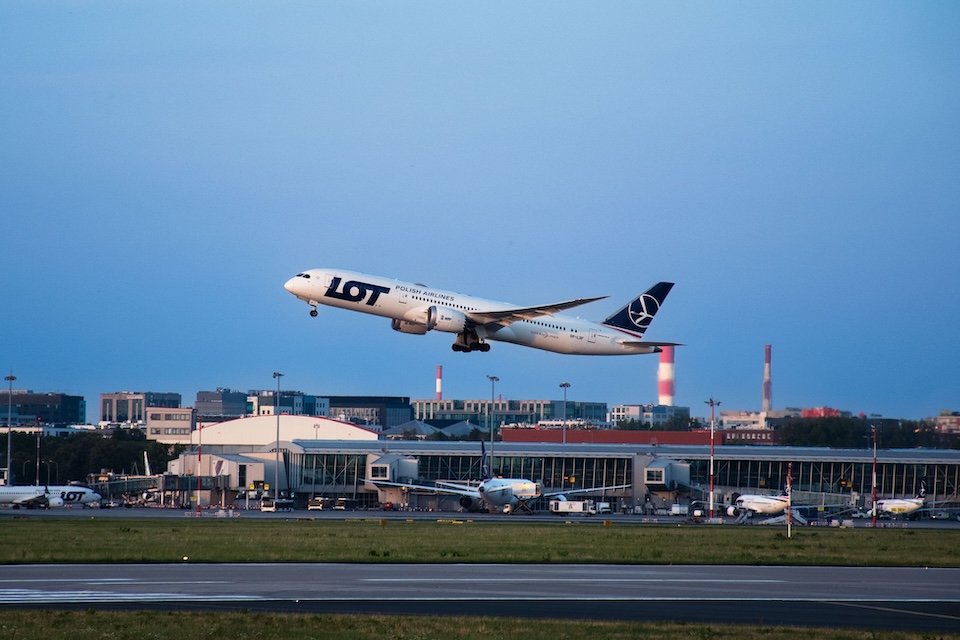
Poland’s air cargo sector showcased its success and strong confidence about its future during the TIACA Executive Summit, held in the capital, Warsaw, in early June.
“We are ready for any crisis,” Michal Grochowksi, cargo and mail director of national carrier LOT Cargo, told one session.
Several reasons explain such exuberance despite the war in neighbouring Ukraine, Middle East turmoil and a shaky business environment.
Topping the list is the sheer growth of the sector with the prospect of more to come. New airports are being built and national carrier LOT has opened new destinations as Poland’s economy – now the 20th largest in the world and the sixth in the EU – muscles into fresh overseas markets.
Supporting the sector’s optimism was a presentation by Ken de Witt Hamer, chief executive of WorldACD. There is, he said, “lots of resilience” as WorldACD believes the global market will grow by 2.8% this year.
Poland is well-positioned. Most of Europe’s growth inbound by percentage is into Eastern Europe, which had “a whopping increase of plus 26% this year so far”, added De Witt Hamer.
In terms of absolute volume growth of the 30 European nations, Germany leads so far this year, but Poland comes sixth with 8,000 tonnes in extra cargo volumes in the first four months.
Whilst the Polish market is decently balanced with outbound-inbound at 54%-46% respectively, inbound growth has been 28%.
“Incredible,” said De Witt Hamer. Key markets here are Hong Kong, China, the US and Vietnam. This reflects not just Poland emerging as a world trader but Eastern Europe, its natural catchment, doing something similar.
Helping further is strong government support. Not only is there the new state-of-the-art gateway airport in Warsaw coming on line in seven years, but Katowice in the south of the country is being tasked with capturing flows going to adjacent countries such as Czechia, Hungary and Poland.
“Warsaw is the national hub and Katowice is a regional platform,” explained Mariusz Kuczek, cargo business development director of Katowice Airport Cargo City, adding its location lends it well to consolidation and specialist cargo.
Some 13.5m people live within two hours of Katowice and there are five capitals within 350 km, giving it a significant catchment area.
It’s not Warsaw versus Katowice but each supporting the other, said Kuczek. Two airports aiming at different segments and knowing they have different roles are significant assets for companies with global ambitions such as LOT and the Polish industry in general, as Grochowski acknowledged.
“The world for us is not only China and the US. Of course, we have India, a fantastic tourist market for us; we have Korea, we have Japan, and we are going into Vietnam and Thailand,” said Grochowski.
Expanding the roster
The national carrier has 90 planes, all either Boeing or Embraer and not one designated freighter. LOT is very much a bellyhold carrier but one with reach as it serves over 100 destinations.
The most recent addition came on 31 May when Almaty was added to the roster. The city is LOT’s second destination in Kazakhstan, which will be served directly four times a week in the summer and three times in the winter using a Boeing 737 MAX 8 aircraft.
There are no plans to change the bellyhold strategy, although Grochowski was confident it could do freighter business well even though it is currently wary of it.
All this has been productive as LOT has enjoyed five years of growth of between 5% and 6%, meaning there is a track record to match the talk.
Helping drive it all has been an improved service offer. LOT has all the IATA CEIV certificates and will probably be among the first for the AI CEIV when that august body gets round to creating one. Grochowski also pointed out it was the first carrier in Europe to go digital.
“We are proud that we have the full offer,” said Grochowski, who views AI totally without the fear some in the industry do. “We are trying to implement all the things coming from Artificial Intelligence. We want to be the best in the market.”
Going into more detail about AI’s potential to revolutionise the cargo industry was Antonia Ambrozy, revenue operations and commercial director of WebCargo by Freightos.
She pointed out AI allowed patterns and information about how customers receive quotes to be detected. “That creates a USP for yourselves,” she said. Olivier Houri, executive vice president and chief revenue officer at SmartKargo, added it allowed more intelligent route optimisation.
What Grochowksi cautioned against is the overuse of AI or the belief that it can solve all problems.
Using them all will create a Frankenstein – “not my target”, he said. Instead, what he advocated was a “solid backbone” of AI which uses the big benefits of AI strategically and by judicious implementation, as well as working with partners.