


July 6 presents a modest but operationally significant shift at Kharg Island, where both the western and eastern crude terminals were reoccupied overnight by dark ballast tankers, fresh arrivals not present in the July 5 collection, indicating a new loading cycle is opening after a period of terminal vacancy. Three dark VLCC-class tankers of approximately 333 meters are now at berth across both terminals, with loading expected to commence within 6 to 24 hours.
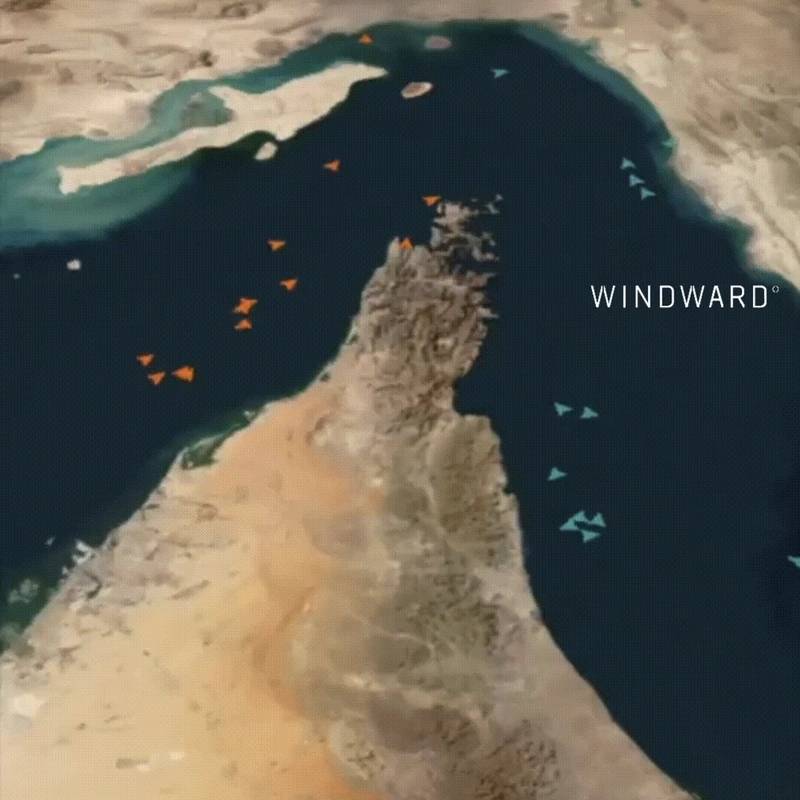
July 5 recorded 36 AlS-visible transits, 20 inbound and 16 outbound, with the southern corridor accounting for 11 of 16 outbound transits, a notably higher share than the northern corridor’s 5. All 16 outbound vessels transmitted AlS, a continuation of the post-MoU trend of reduced dark activity among outbound traffic. Overnight outbound cargo was modest at approximately $62 million across approximately 910,000 barrels, with no LNG or LPG recorded in the window.
While transit volumes and cargo throughput remain well below pre-conflict levels, the return of tankers to Kharg Island’s loading berths points to a gradual, if fragile, resumption of Iranian crude export operations, one that will need sustained monitoring across the coming collection windows to determine whether it marks a durable uptick or another false start.
TRANSITS THROUGH THE STRAIT OF HORMUZ
July 5 recorded 36 transits, made up of 20 inbound and 16 outbound.
The inbound group comprised 15 AlS-transmitting and 5 dark vessels. By vessel type, 13 were tankers under Bahamas, Liberia, Saint Kitts and Nevis, Angola, Marshall Islands, Barbados, Hong Kong, and Palau flags, 4 bulk carriers under Panama, Marshall Islands, Iran, and Liberia flags, and 3 cargo vessels under Saint Vincent and the Grenadines, Saint Kitts and Nevis, and Comoros flags. Eleven transited via the northern corridor and 9 via the southern corridor.
The outbound group comprised 16 AlS-transmitting and 0 dark vessels. By vessel type, 11 were tankers under Liberia, Palau, Singapore, Panama, Gabon, Marshall Islands, and Bahamas flags, and 5 cargo vessels under Marshall Islands, Comoros, Sri Lanka, and Iran flags. Five transited via the northern corridor and 11 via the southern corridor.
STRAIT OF HORMUZ OUTBOUND CARGO
Outbound tanker cargo in the July 5 to 6 overnight window totaled approximately $62 million, comprising approximately 720,000 barrels of crude at approximately $49 million and approximately 180,000 barrels of oil products at approximately $13 million, per Vortexa data. No LNG or LPG was recorded outbound in this window.
KHARG ISLAND ANALYSIS
EO imagery collected over Kharg Island on July 6 at 05:51 UTC showed both the western and eastern crude terminals reoccupied by dark ballast tankers overnight, none of which were present in the July 5 collection, indicating fresh arrivals consistent with the opening of a new loading cycle.
At the western terminal, one dark ballast tanker of approximately 333 meters was confirmed at berth. At the eastern terminal, two dark ballast tankers of approximately 333 meters each were present, one at the southern berth position and one at the northern berth position. Based on prior loading cycle durations at these berths, loading is expected to commence within 6 to 24 hours of arrival.
The LPG and Sulphur terminal remained empty for a 14th consecutive day, last confirmed occupied on June 22.
The eastern waiting area held 19 dark stationary tankers with no AIS, with 9 IRGC high-speed craft observed transiting through the anchored fleet. The composition comprised 9 VLCCs of approximately 333 meters, 8 laden and 1 ballast, 2 Suezmax-class vessels of approximately 272 meters in ballast, 3 laden tankers of approximately 252 meters, 3 laden tankers of approximately 178 meters, and 2 laden tankers of approximately 118 meters. The western waiting area held no tankers, with 2 HSC observed transiting through unrelated to the eastern congestion.
CURRENT THREAT ASSESSMENT
- The reoccupation of both Kharg Island crude terminals by dark ballast tankers overnight signals the opening of a new loading cycle, with three VLCC-class vessels assessed as commencing loading within 6 to 24 hours, a resumption of export activity following the terminal vacancy documented on July 5.
- The eastern waiting area holds 19 dark stationary tankers, predominantly laden, alongside 9 IRGC high-speed craft threading through the anchored fleet, consistent with the sustained export staging and patrol presence pattern observed throughout late June and early July.
- July 5 recorded all 16 outbound vessels transmitting AlS, continuing the post-MoU trend of reduced concealment behavior among outbound traffic, while 5 of 20 inbound vessels remained dark, indicating asymmetric transparency between the two directions.
- The southern corridor accounted for 11 of 16 outbound transits on July 5, reflecting continued operator preference for the Omani-side route despite the IRGC enforcement actions documented on July 4.
- The operational-risk environment for commercial shipping throughout the Strait of Hormuz, Gulf of Oman, and northern Arabian Gulf remains High, with IRGC corridor enforcement, active dark tanker staging at Kharg Island, and the IMO evacuation framework still unresolved.