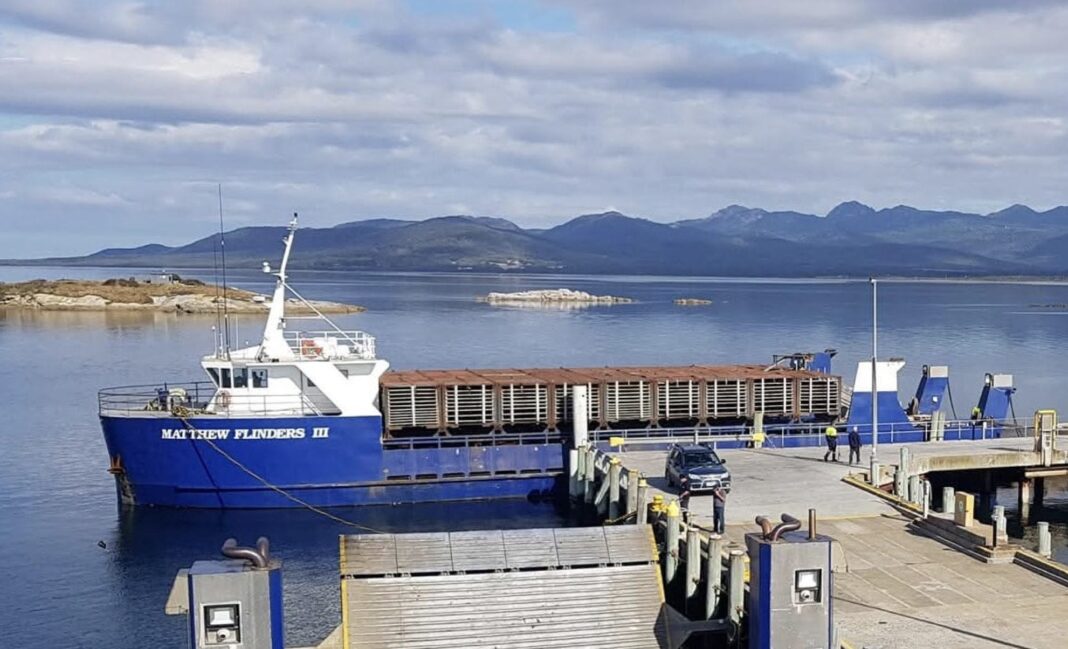

A mechanical fault left a Bass Strait cargo vessel without steering for more than eight hours after the crew was unable to use an available backup steering system because the master had not been adequately trained on its operation, according to an investigation released Tuesday by the Australian Transport Safety Bureau (ATSB).
The incident occurred late on July 23, 2025, as the 44.6-meter mixed cargo vessel Matthew Flinders III was sailing from Bridport, Tasmania, to Lady Barron on Flinders Island carrying fertilizer and agricultural machinery. About four nautical miles north of Waterhouse Island, an autopilot alarm sounded after the ship’s rudders locked hard to port, sending the vessel into an uncontrolled turn in moderate seas.
With the ship rolling heavily in a two-meter swell, the crew was initially unable to identify the cause of the steering failure. They disconnected the hydraulic steering gear from the rudder crossbar, manually centered the rudders, and used differential thrust from the vessel’s twin propellers to regain limited control and keep clear of the coast. After initially heading toward Flinders Island, the vessel turned back toward Bridport while the crew continued troubleshooting. Roughly eight hours later, the chief engineer found a loose linkage arm on the rudder angle sensor, tightened the grub screws securing it, restored steering, and the vessel resumed its voyage to Lady Barron without further incident.
The ATSB found the loose linkage arm caused the autopilot system to lose rudder angle feedback, disabling both the autopilot and follow-up manual steering modes. However, investigators determined the ship’s non-follow-up “toggle steering” backup system remained fully operational throughout the incident.
“The toggle steering system was available throughout the occurrence and was engaged by the engineer in an attempt to reinstate rudder control,” ATSB Chief Commissioner Angus Mitchell said. “However, the master was unfamiliar with the toggle steering controls on the bridge and was unable to regain steering.”
The investigation concluded that induction training for new personnel did not adequately cover the backup steering system. The vessel’s safety management system also lacked clear instructions on using the non-follow-up controls, bridge toggle switches were not labeled, and required emergency steering changeover procedures were not posted. In addition, emergency steering drills had not been conducted at the required three-month intervals, and drills that were held did not include operating the steering system in backup mode. As a result, the master had never participated in an emergency steering drill before the incident.
Following the incident, operator Bass Strait Freight updated its crew familiarization and induction process, introduced competency assessments for new officers, and posted simplified steering mode changeover procedures on the bridge and in the engine room. The ATSB said those measures were positive but issued a formal safety recommendation calling for further improvements to the company’s emergency steering procedures and safety management system.
“Shipping companies are reminded of the importance of the availability of clear and simple instructions and procedures as part of their safety management systems,” Mitchell said. “This is especially important on ships with non-standard design features, or unusual operational characteristics, and for operators who may have a high turnover of casual crew.”
Subscribe for Daily Maritime Insights
Sign up for gCaptain’s newsletter and never miss an update