

(Bloomberg) — The UK and France’s plans to de-mine the Strait of Hormuz were dealt a setback after a fresh attacks on vessels passing through the waterway, days after Oman granted the European powers permission to help clear its southern route.
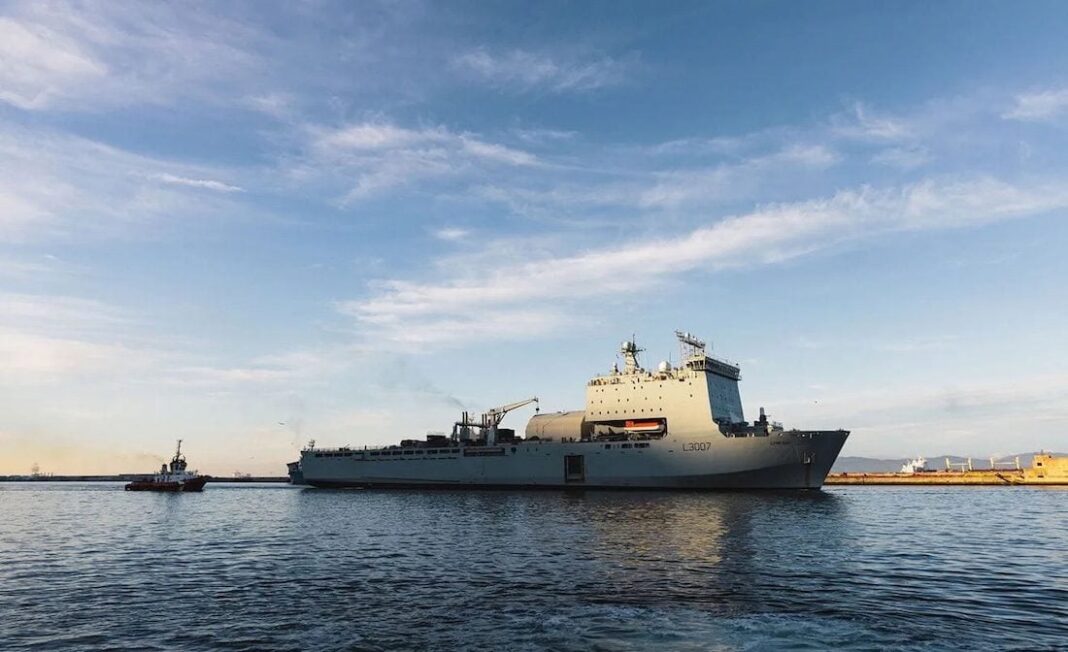
British and French mine-hunting vessels and forces are positioned to begin a limited de-mining operation in Omani waters when a military order is given, according to officials from the two European countries, who asked not to be identified as the plans haven’t been made public.
That’s after a diplomatic breakthrough was achieved in persuading Oman to endorse the mission, announced by the UK and France on July 4.
The timing remains unclear, with some officials saying before the early Tuesday attack on Qatari-owned liquefied natural gas carrier that the operation could begin as soon as this week. Others warned it won’t start imminently due to complexities and need for more stable conditions.
Three Tankers Attacked Near Strait of Hormuz as JMIC Warns of ‘Severe’ Threat
The officials say that’s in part due to the sensitive timing, with some concerned that the move risks antagonizing Iran. The Islamic Republic is observing a weeklong mourning period for late Supreme Leader Ayatollah Ali Khamenei, and despite an interim agreement with the US in June to end their four-month war, Iran continues to insist it should retain control of the trade chokepoint.
Oman notified Iran of the diplomatic progress, while the UK and France are communicating with the US, the officials said.
Informal discussions on Iran and the Strait of Hormuz are expected to take place between leaders at the NATO summit in Turkey this week, they said.
A formal operation to de-mine the waterway could help reassure shipowners and insurers that the world’s most important energy transit passage is safe to use, though occasional attacks such as Tuesday’s have heightened unease about safety.
Iran effectively closed the strait when the US and Israel began airstrikes on the Islamic Republic in late February, and future management of the chokepoint — including fees — has become a major negotiation topic in ongoing peace talks.
Industry groups have cautioned that even though a ceasefire between the US and Iran remains in place, the presence of mines is a major risk for ships.
Two routes are available when transiting Hormuz, one that runs close to Iran and another that hugs the Omani coastline. The Omani route was recently widened to allow for traffic to both enter and exit Hormuz simultaneously, though it’s unclear how the widening occurred. At least two mines have reportedly been spotted close to that corridor since it came into use.
Iran has repeatedly said that it won’t let vessels transit Hormuz without its permission, and some ships recently diverted north to exit the Persian Gulf through Tehran’s waters, rather than the Oman corridor.
Iran’s Deputy Foreign Minister Kazem Gharibabadi told Iran state TV on June 29 that mine-clearance in the area is the sole responsibility of Iran and “we have warned the Omanis that other countries have no right to interfere in this matter.”
The UK-France statement on Oman was intentionally vague. They said Muscat had agreed to “work closely” to “support” their efforts to “restore freedom of navigation in the Strait of Hormuz and provide shipping with the reassurance needed to transit through the Strait.”
One official said that Oman agreed to provide military protection to British and French forces, which was behind President Emmanuel Macron’s decision to return French aircraft carrier Charles de Gaulle to its home port after a near two-month deployment near the strait.
The operation — which would be confined to Omani territorial waters — would act as a pre-cursor to the broader multinational mission the UK and France have been preparing to escort ships through the strait once a permanent peace deal is reached. Europe wants to conduct the wider mission — which would require its minehunting vessels to enter Iranian waters — in coordination with Iran.
© 2026 Bloomberg L.P.
This article contains reporting from Bloomberg, published under license.
Subscribe for Daily Maritime Insights
Sign up for gCaptain’s newsletter and never miss an update