


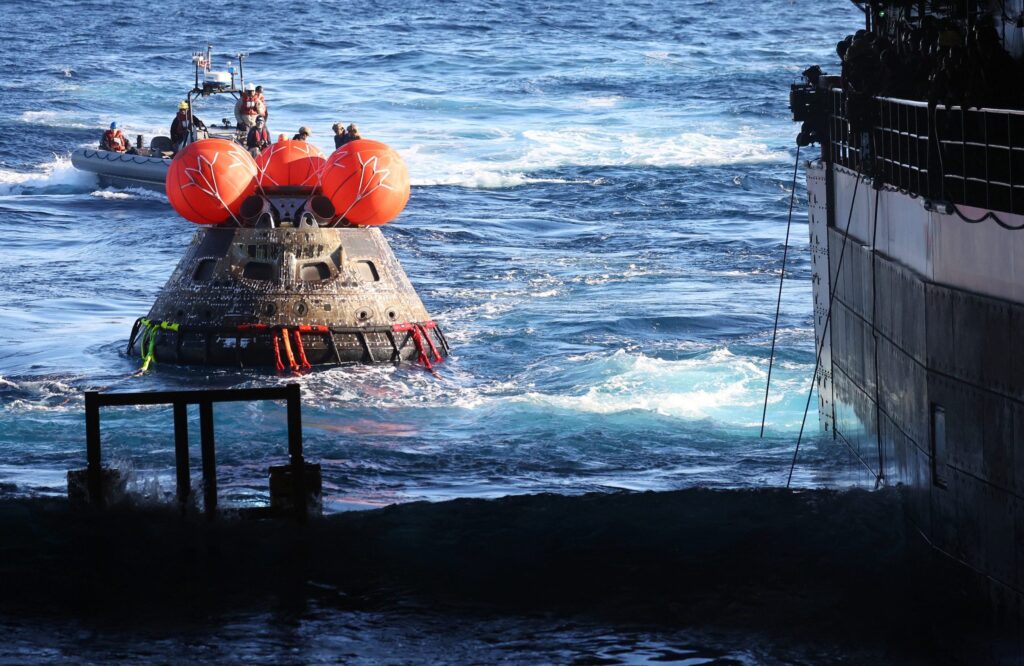
The Trump administration is taking its first formal step toward evaluating whether federal offshore waters could support commercial space launches and spacecraft recovery operations.
The Bureau of Ocean Energy Management (BOEM) on Tuesday announced it will publish a Request for Information (RFI) seeking public and industry feedback on the potential use of the U.S. Outer Continental Shelf (OCS) for offshore space launch, re-entry and recovery infrastructure.
The RFI, scheduled for publication in the Federal Register on July 8, opens a 30-day public comment period through Aug. 7. BOEM said it is looking for technical, environmental, operational and safety information that could help shape future planning and coordination for offshore space activities.
The initiative reflects the administration’s push to expand U.S. commercial space capabilities following President Donald Trump’s December 2025 executive order, Ensuring American Space Superioritywhich directed federal agencies to identify policies supporting growth in the commercial space sector.
“The Outer Continental Shelf presents a significant opportunity to support the future of America’s space economy,” Acting BOEM Director Matt Giacona said in a statement. “Offshore launch, re-entry, and recovery infrastructure could expand operational flexibility, increase capacity, reduce constraints on growing launch demand, and strengthen the nation’s commercial and national security space capabilities.”
BOEM oversees roughly 3.2 billion acres of the U.S. Outer Continental Shelf, which has traditionally been managed for offshore energy development. The agency said the RFI is intended to assess whether portions of those waters could also support emerging space infrastructure while identifying environmental considerations, technical standards and best practices.
The request also seeks information on domestic and international guidelines relevant to offshore launch and recovery facilities, as well as current technologies and operational practices being developed by the commercial space industry.
The move marks another sign that offshore infrastructure may play an increasing role beyond energy production, as federal agencies explore new commercial uses for the Outer Continental Shelf. Any future offshore space projects would still require additional environmental review, interagency coordination and regulatory approvals before development could proceed.
Subscribe for Daily Maritime Insights
Sign up for gCaptain’s newsletter and never miss an update