

The European Parliament has voted through its negotiating position on the EU’s Military Mobility Regulation, clearing the way for trilogue talks with the Council to begin next week. Compensation for private rail and logistics assets is already emerging as a likely fault line, after one of Parliament’s lead negotiators warned that Member States could face problems with their own companies if the issue is not settled at EU level.
The Military Mobility Regulation, designed to turn the EU’s “Military Schengen” concept into a practical system for moving troops and equipment across the bloc, is now heading into trilogue talks in Brussels next Thursday.
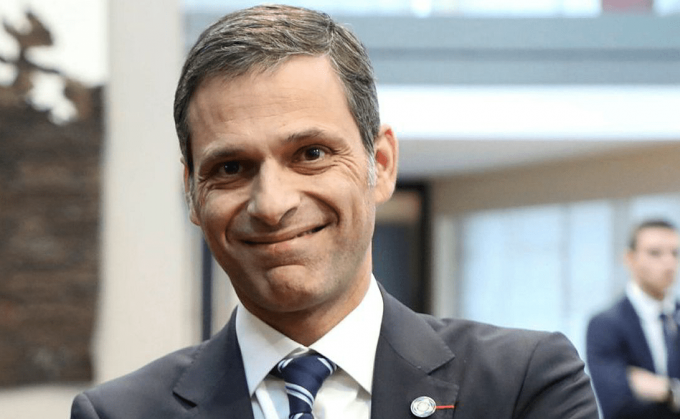
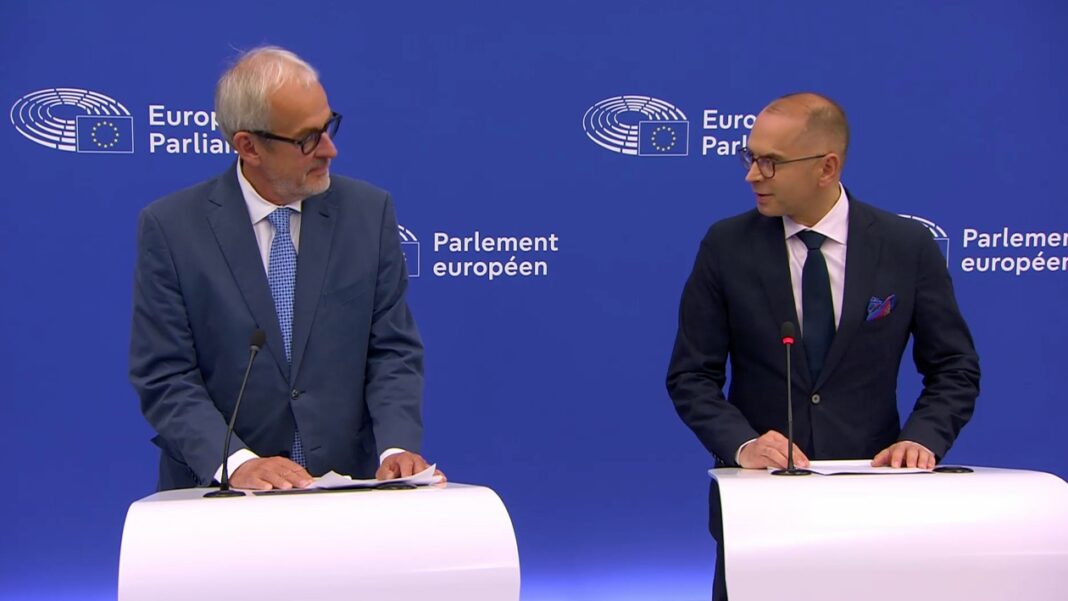
Michał Szczerba and Roberts Zīle, Parliament’s lead negotiators on the file, said the plenary vote gave MEPs a “clear mandate” ahead of talks with the Council. The aim, they added, is to conclude the regulation by the end of the year and have its emergency military mobility system, EMERS, operational no later than 2028.
The new rules are intended to remove barriers that still slow military transport across Europe, from paper-based customs procedures to unclear emergency rules. But with Parliament preparing to defend faster deadlines, stronger emergency powers and a wider compensation mechanism, Zīle warned that agreement may not be straightforward: “It will not be easy, but I guess and I hope that we will find a constructive way forward.”
Compensation fault line
RailFreight.com last week examined the main freight fault lines likely to come up during the Military Mobility Regulation talks, including emergency priority rules, the Solidarity Pool and the digital systems intended to make Military Schengen work in practice.
During the press conference in Strasbourg, compensation emerged as one of the key freight-relevant sticking points, both when military movements receive priority access to rail infrastructure and when private infrastructure or assets are brought into the proposed Solidarity Pool.
Zīle said Parliament had met private-sector stakeholders, including logistics companies with experience in military convoys, and that private businesses were interested in working with the military. But compensation remained part of the discussion, as companies “expect some compensation for priorities regarding access to railway infrastructure.”
“Compensation is in our mandate to negotiate with the Council, and we will see at the end,” Zīle said when asked how Member States may react to a wider compensation mechanism for private companies. That is currently not in the Council’s amended version of the regulation, with Member States likely to be wary of locking in what could become costly obligations further down the line.
“If the Council disagrees with this, it’s their problem, a Member State problem,” Zīle said. “If they don’t want to compensate the private sector in their countries, they would have a problem with the private sector in their own Member States.”
He acknowledged, however, that the issue had not been developed into a full article in Parliament’s text, leaving room for negotiation over whether compensation should be handled nationally or through a wider EU mechanism.
Szczerba linked the issue directly to the proposed Solidarity Pool, saying Parliament wants private infrastructure and private assets to be included. “If we have this chance to use it, we have to compensate the private sector for their property,” he said.
Emergency rules and digital deadline
Parliament is also preparing to defend a broader version of the emergency regime than Member States may be comfortable with. Zīle said that once EMERS is activated by the Council, Parliament’s position is that it should apply across the whole EU, rather than only in the countries closest to a crisis or on the most exposed military corridors.
He argued that a hostile actor could otherwise target a limited number of countries while the rest of Europe continued under normal procedures. “We cannot say that if something happens with the emergency regime or some activities of a potential enemy, that it would be only a problem for those countries or neighbouring countries regarding military mobility, while all the rest of Europe will just leave it as it is,” Zīle said. “It’s not like that. It cannot be like that.”
Parliament is also pushing for faster digitalisation of military transport permissions and customs procedures. Szczerba said the Military Mobility Digital Information System should be operational “as soon as possible, but no later than 2028”. It would cover military transport permissions, traffic arrangements and customs formalities linked to EU Form 302, while remaining compatible with NATO logistics systems, including LOGFAS.
Funding and non-friendly suppliers
The rapporteurs stressed the regulation would not settle the wider funding question. Szczerba said the next EU budget proposal foresees a ten-fold increase in military mobility funding to around 18 billion euros, but Zīle said even that would not cover the scale of the infrastructure needs, pointing to around 500 hotspots — places where infrastructure, energy supply, water supply or rest facilities may be needed to support military movements — and potentially thousands under more detailed mapping.
The debate also has a procurement angle. Parliament is pushing stronger supplier rules for the Solidarity Pool, including limits on companies linked to “non-friendly countries”, with potential implications for rail-sector manufacturers, equipment suppliers and logistics companies exposed to Chinese components or systems.
Zīle said the Council had not elaborated on the issue to the same extent, adding: “Let’s be honest, in Ukraine as well, many drones are built with motors from China, and so on. That is how it works today.” But he said the longer-term direction should be clear: “In the long run, we have to avoid non-friendly country suppliers, but we have to think in the short run as well.”