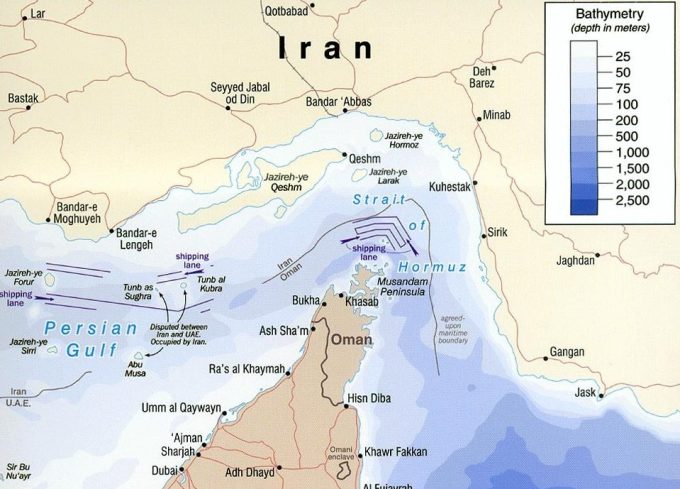

Indian shippers are growing concerned for their cargo onboard the Malta-flagged San Antonio, attacked while trying to exit the Strait of Hormuz.
The trapped 2,824 teu vessel was deployed on CMA CGM’s Midas Loop 2 between India, the Middle East and Africa, according to available information and suffered multiple crew injuries and serious damage in a missile attack on 5 May.
Indeed, “it was so damaged that we’re wondering whether we should send it for scrapping”, commented CMA CGM chairman and CEO Rodolphe Saade.
And it is believed CMA CGM is considering declaring General Average provisions on the cargo, which sources suggest include some 200 to 250 Indian containers.
By maritime law, war-risk insurance pays for the shipowner’s share of GA, while the cargo owner’s insurance pays for the cargo share. But the process is a considerably lengthy one, according to industry experts.
Containers on the vessel are expected to be discharged at “a safe or feasible location” in the Gulf region, and cargo owners will then have the option to secure the release of boxes after covering their portion of claims.
Given the circumstances involved, this will likely be a “total loss” case for Indian shippers, sources believe.
The Saint Anthony was one of several CMA CGM-operated containerships stranded when the critical waterway closed due to military tension between the US/Israel and Iran.
The French liner had consolidated India-Middle East capacity with the launch of a two-string BIGEX network in June 2024, which has been downsized to a single loop operation since the Persian Gulf crisis.
BIGEX sailings have been instrumental in evacuating a major portion of Middle East-bound containers rerouted to Indian ports. The shuttle service normally rotates Nhava Sheva, Hazira, Mundra, Fujairah, Sohar and Nhava Sheva, with Cochin (South India) and Colombo (Sri Lanka) served intermittently in recent weeks to tap into incremental volumes.
Supply chains at several Persian Gulf ports remain problematic due to high import levels and landside capacity bottlenecks. As a result, CMA CGM recently told Indian customers it was restricting acceptance of cargo bookings to Jeddah, in Saudi Arabia, moving under “merchant haulage” contracts.
Instead, the French liner said it would only accept cargo meant to be transited via Jeddah for other Persian Gulf countries with “carrier haulage.”
Similarly, Oman Customs last month introduced a mandatory palletisation requirement for all cargo shipped into the country. The new rules were to apply to both ocean and sea freight meant for local imports as well as in-transit movement.
Oman’s Salalah and Sohar ports have emerged as vital alternatives to Middle East trades as Hormuz transits continue to be volatile.
This article is © The Loadstar. Reproduction, rewriting, or derivative use requires a license. Contact [email protected] for licensing enquiries.