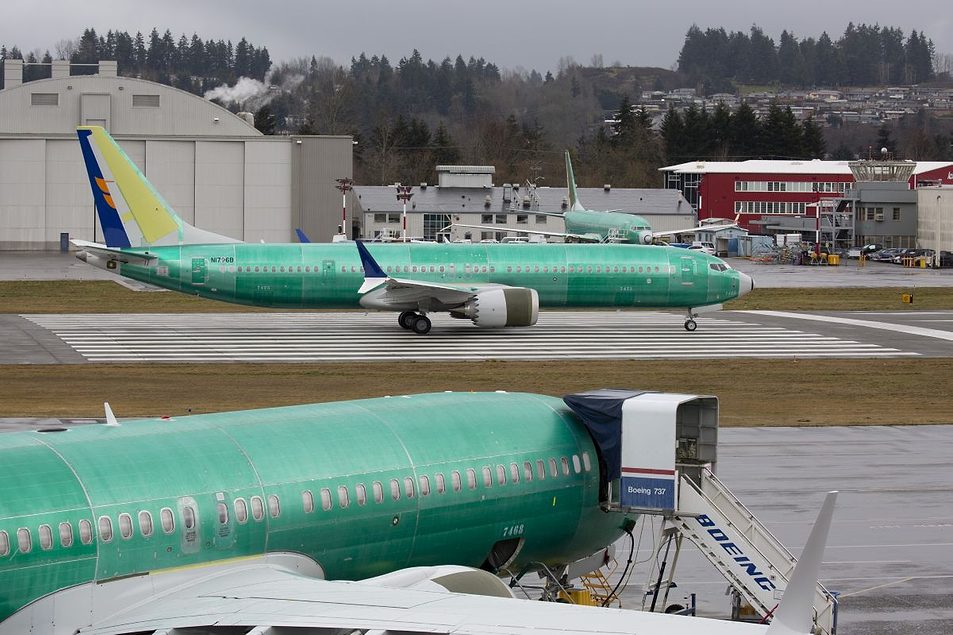

Boeing Co. formally opened its fourth 737 Max assembly line near Seattle on July 10, as the U.S. planemaker looks to cash in on its growing backlog, though output from the factory will initially be at a low rate.
The line inside Boeing’s Everett site, where it mainly produces its widebody models such as the 777, 767 and upcoming 777X, will initially employ about 1,000 workers, Jennifer Boland-Masterson, a senior director at the company, said during a media tour.
Boeing will adopt a low build rate to iron out any kinks and ensure operations run smoothly, Boland-Masterson said. She declined to specify how quickly the line will scale but said Boeing will add more workers as production increases.
The new assembly line is a key component of Boeing’s attempt to ramp up output of its workhorse 737 Max family after the Federal Aviation Administration capped production at 38 planes a month in 2024 following a near-catastrophic accident that led to a wholesale switch of senior leadership.
In May, Chief Executive Officer Kelly Ortberg said the planemaker had been authorized to increase output to 47 planes a month.
Boeing eventually aims to raise 737 monthly output to 63, key to paying pay down debt, improving its finances and challenging Airbus SE’s dominance in the money-spinning single-aisle aircraft segment.
Boeing’s tour showcased an array of tooling and work stations as well as machines hauling a sheathed fuselage that will be assembled on the new production line. Boeing builds 737 Max fuselages at its site in Wichita, Kansas, and transports them by rail to Seattle.
It came days before airlines and parts suppliers from around the world converge outside of London for the Farnborough airshow, with Boeing and Airbus jockeying to unveil blockbuster plane orders.
The world’s largest planemakers face hurdles to their growth plans, including conquering parts and labor shortages lingering from the coronavirus pandemic.
Airbus has struggled with supply chain constraints while it works to ramp up output of its rival A321neo model, and has had to repeatedly push back its target of achieving a production rate of 75 planes a month. This week, workers in Spain kicked off a labor strike in a protest over work conditions over the past years.
The area for the new 737 North line was previously used to assemble the 787 Dreamliner before production of that model was consolidated in North Charleston, South Carolina. Given the space was previously used to build bigger aircraft, Boeing is using the extra floor area to adapt to changing cabin trends.
As airlines add more lie-flat seats to narrowbody aircraft to target premium fliers, the new line has additional stations that give workers time to install complicated interiors without disrupting the rest of the line, Boland-Masterson said.
Some 50% of the workers are from Boeing’s core 737 Max factory at Renton, south of Seattle, and the other half are new employees, being trained up at the main narrowbody facility.
The first aircraft the new line is building is a 737 Max 10, an as-yet uncertified variant that is destined for Canada’s WestJet, Boeing said.