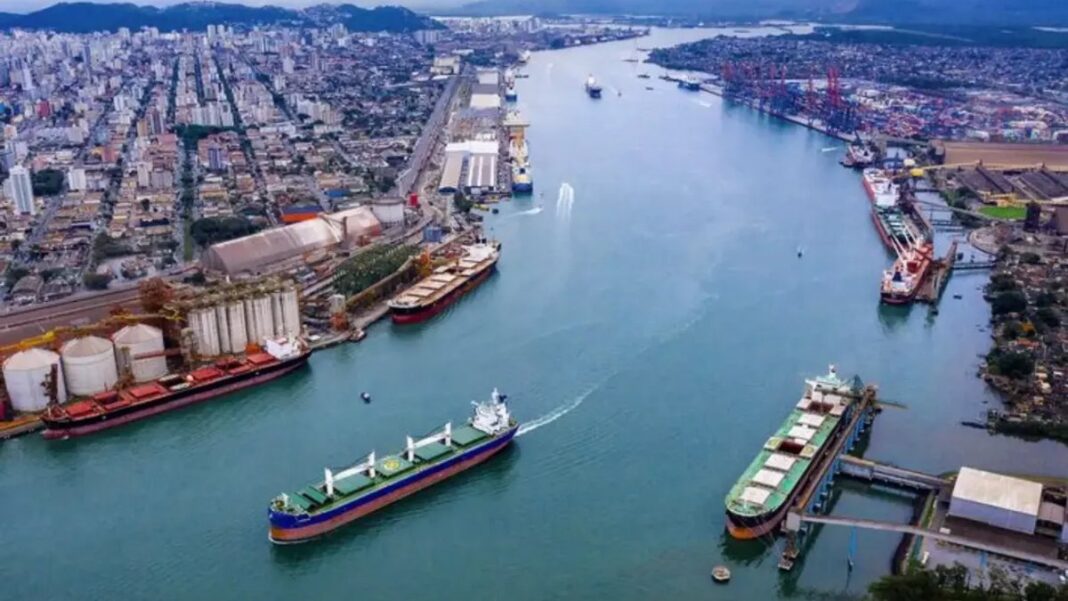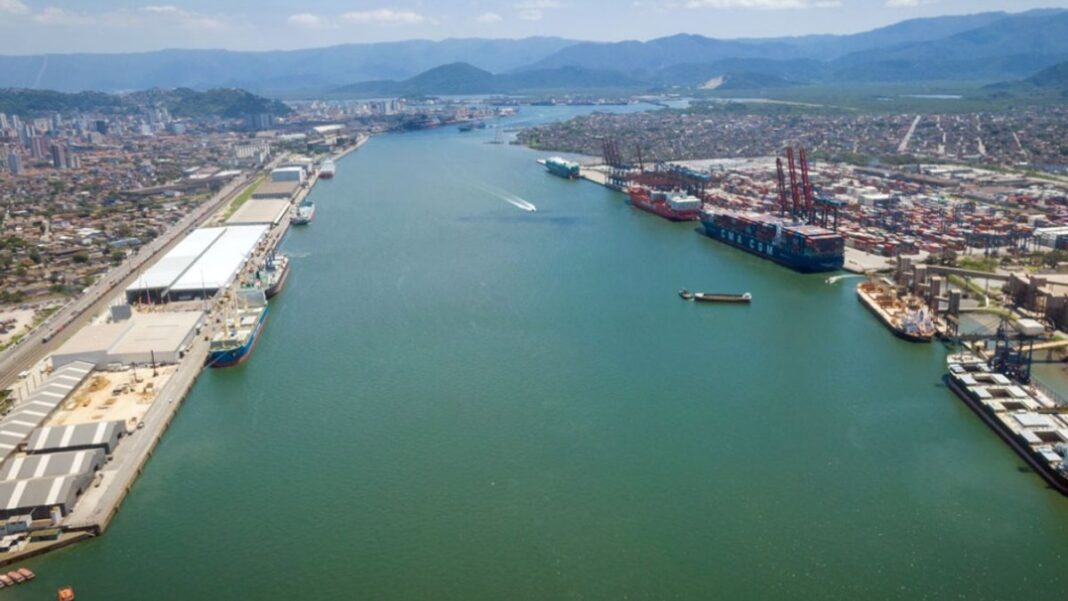

The immersed tunnel project between Santos and Guarujá took another step towards getting off the ground. The Santos Port Authority (APS) and the government of the State of São Paulo signed this Tuesday (15) a Term of Commitment that establishes the rules for managing the contribution of R$ 2.6 billion from the Union destined for the work.
The agreement meets a requirement from the Federal Audit Court (TCU), which conditioned the release of federal resources on the creation of a governance model capable of guaranteeing transparency, control and legal certainty over the application of public money.
Super Rectangle (728×90) – Position 17
The document was signed by the acting president of the APS, Júlio Cézar Alves de Oliveira, and by the Secretary of Investment Partnerships of the State of São Paulo, Rafael Benini.
The resources under the responsibility of APS correspond to half of the public contribution provided for in the project’s concession contract. According to the defined model, federal money will remain deposited in an escrow account, held by the Union, until the conditions for each disbursement are met.
The transfer of amounts to the São Paulo government will only occur after the issuance of a technical report and a formal statement approved by the Santos Port Authority itself, a mechanism that seeks to ensure that payments follow the physical progress of the work.
In addition to regulating the release of resources, the term creates the Federal Costing Governance Technical Committee, a permanent body responsible for monitoring the execution of the project.
The panel will be composed of representatives from APS, the Secretariat for Investment Partnerships (SPI) and the Transport Agency of the State of São Paulo (Artesp). Representatives from the National Waterway Transport Agency (Antaq) and the Ministry of Ports and Airports may also participate.
According to the agreement, the committee will have the role of coordinating the exchange of information between the bodies involved, monitoring the physical-financial execution of the work and monitoring risk management during the construction of the tunnel.
Considered one of the country’s main logistics infrastructure projects, the Santos-Guarujá Tunnel is expected to replace part of the crossing currently carried out by ferries, reducing travel time between the two cities and improving access to the Port of Santos, the largest in Latin America. The project will be carried out through a concession with financial participation from the federal and state governments.
Stay up to date with all the news from the Brazilian port sector
Follow the Jornal Portuário channel on WhatsApp