
Disclosure
A MSC ea Maersk notified the Administrative Council for Economic Defense (Cade) committing to close the company they maintain in Brazil Port Terminal (BTP)if one of the two companies wins the auction Tecon Santos 10the future container terminal at the Port of Santos and considered the largest port project in the country.
Currently, BTP is controlled in equal parts by APM Terminalsa subsidiary of Maersk, and by Terminal Investment Limited (TiL)a company linked to MSC in partnership with the management company Global Infrastructure Partners (GIP)controlled by BlackRock.
Super Rectangle (728×90) – Position 17
The notification to Cade seeks to meet one of the main requirements foreseen for the Tecon Santos 10 dispute. According to the model under discussion, operators that already have container terminals in Santos will only be able to participate in the initial phase of the bidding if they present, before the publication of the notice, an irrevocable commitment to sell their stake in an existing terminal in the port.
Largest port project in the country
The Tecon Santos 10 was designed to move up to 3 million TEUs per yeara capacity equivalent to twice that currently operated by BTP. The concession will last for 25 yearswith a forecast of approximately R$6.4 billion in investmentsaccording to the Ministry of Ports and Airports.
In addition to MSC and Maersk, the project also attracts interest from other large international and national groups, including the Chinese company Cosco ea JBS Terminaisport arm of the J&F group.
BTP accounts for 31% of container movement
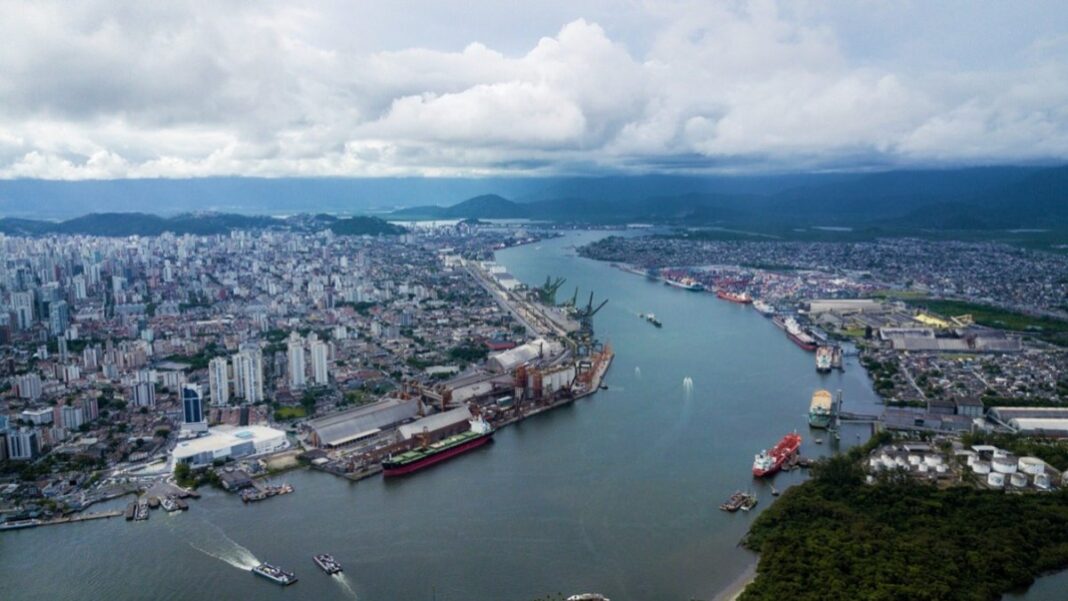
Located in the Alemoa region, on the right bank of the Port of Santos, BTP operates a multipurpose terminal focused on the movement of containers and liquid bulk.
In 2025, the company recorded revenue of R$2.1 billion and responded by 31% of all container movement at the Port of Santossecond only to Santos Brasil.
Verticalization strategy
MSC and Maersk are the world’s two largest shipowners and together represent around a third of global container shipping capacity.
In recent years, both have intensified investments in port terminals as part of a business verticalization strategy. By also controlling the infrastructure where their ships dock, companies increase control over operational costs, berth availability and logistical efficiency.
Role still to be defined
After releasing the notification to Cade, Maersk clarified that its position in the eventual operation has not yet been defined.
According to the company, if one of the parties wins Tecon Santos 10, APM Terminals will be able to either acquire the remaining 50% of BTP or sell its own stake. The definition will depend exclusively on the result of the auction.
The decision on the definitive model for operator participation in Tecon Santos 10 continues to be one of the main points of discussion between the federal government, the Federal Audit Court (TCU) and agents in the port sector, given the competitive impacts that the new terminal could generate in the Port of Santos.