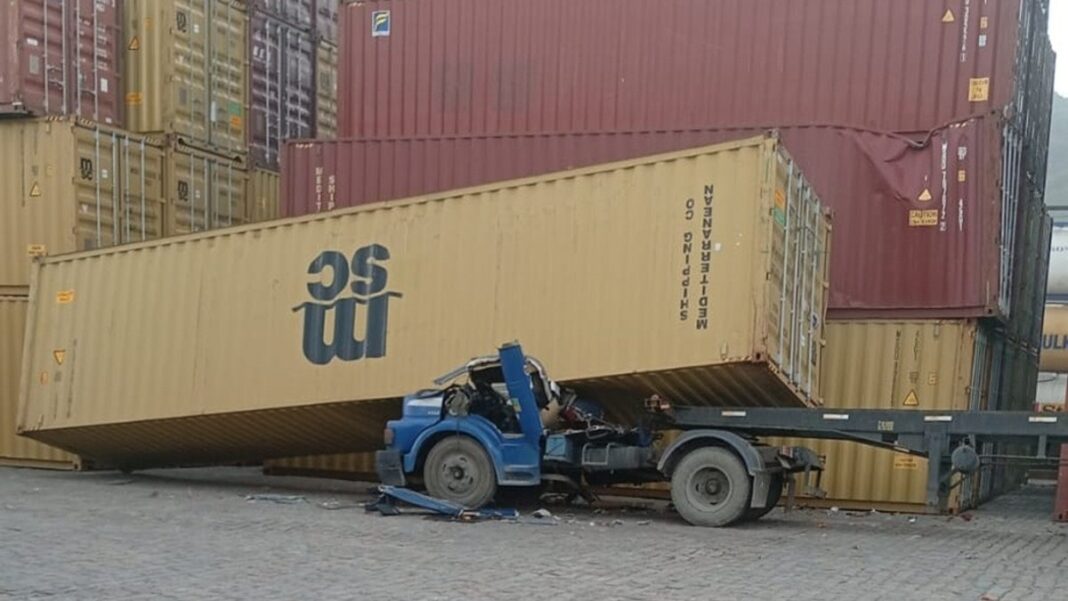

Internet Reproduction! Received by one of our followers (Porto de Santos).
A strong storm hit the coast of São Paulo this Wednesday (29) and caused impacts on the operations of the Port of Santos. Wind gusts exceeding 100 km/h hit the region and images posted on social media show a truck completely destroyed after being hit by a container moved by the force of the winds within the port area.
The records show the intensity of the weather phenomenon in the port environment, with workers seeking protection while equipment, structures and cargo were affected by the gusts. So far, there is no information about workers injured in the incident involving the container.
Super Rectangle (728×90) – Position 17
The wind also caused changes in the operational routine of terminals in the Santos complex, with temporary impacts on cargo movement during the most critical period of the storm.
Winds exceeded 100 km/h on the coast
According to information from the Civil Defense of the State of São Paulo, the passage of a cold front was responsible for the sudden change in meteorological conditions. The initial forecast indicated winds of up to 90 km/h, but the gusts exceeded that mark.
In Itanhaém, records showed winds of 103 km/h at around 12:30 pm. The alert was extended to the entire coastal strip of São Paulo, between Itanhaém and Ubatuba, due to the risk of strong winds, intense rain, electrical discharges and the possibility of hail.
In addition to the impacts on the port sector, the storm caused one death in Santos. One person was hit by a tree during the gusts and succumbed to his injuries.
Given the intensity of the phenomenon, the São Paulo Civil Defense activated the Crisis Office to monitor the impacts of the cold front, which is expected to continue influencing weather conditions until Thursday (30).
Adverse conditions also raise an alert for safety in port operations, especially in activities involving the movement of containers, large equipment and exposed structures.
In addition to strong winds, the forecast indicates the possibility of a hangover and rough seas on the coast of São Paulo, factors that could affect ship maneuvers, docking and maritime support activities.
Civil Defense advises the population and workers to avoid places close to trees, poles, signs, fragile coverings and metal structures during periods of wind.
For drivers and teams working in the logistics chain, the recommendation is to increase attention due to the risk of falling objects, reduced visibility and obstacles on access roads.
The episode reinforces a growing theme in the sector: the need to adapt Brazilian port infrastructure to extreme weather events.
Ports like Santos, responsible for moving millions of tons of cargo annually, increasingly need to consider specific protocols for situations involving extreme winds, including preventive shutdown criteria, reinforcement of cargo mooring, equipment protection and rapid communication between terminals, operators and authorities.
The incident also opens up space to discuss the relationship between climate change, operational security and resilience of national logistics.