

Hormuz Flows are Rising, but don’t Call it normal yet: What the US-Iran MoU really means for Global Shipping
The diplomatic breakthrough masking an operational reality
The signing of the US-Iran Memorandum of Understanding and broad sanctions waivers have prompted markets to declare normalcy is returning to the Strait of Hormuz. Crude prices have fallen. Iranian oil is flowing again. The crisis, it seems, is over.
Read also: What’s the True Cost of Hormuz? Much more than you think
But those managing global supply chains and shipping operations should look beyond the headlines. The much-celebrated headlines mask a far more complex operational reality: shipping remains the single biggest constraint on traffic recovery through one of the world’s most critical chokepoints.
The supply surprise no one expected
US sanctions waivers have made far more Iranian crude available globally than anticipated. We calculate 130–150 mb of Iranian oil has been made available, including 22 mb in export terminal tanks, 55 mb on vessels previously stuck, and a further 25–40 mb floating off Asian shores. China will remain the key buyer.
The broader Middle Eastern story tells a similar tale. The increase in Middle Eastern export flows through June led to widespread belief that regional production had recovered to pre-conflict levels. However, satellite analysis and on-the-ground sources suggest the ramp-up has not progressed that far. The June surge was driven by stranded vessel flows (1.8 mb/d) and destocking (0.5 mb/d). Middle Eastern output remains well below pre-conflict levels, and Hormuz throughflows remain volatile and hard to tally due to “dark” transits and AIS reactivation risks. Only 35 mb of stranded volumes remain within the strait — a sign of emerging tightness ahead.
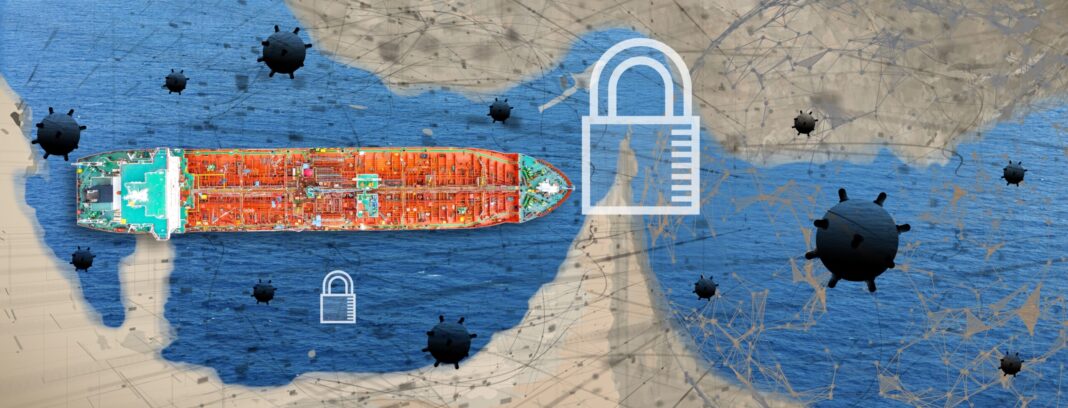
Yet here’s the paradox: while supply is rising, obstacles to sustained higher production remain. Mines continue to plague the Strait, whilst shippers face significant risks from Iranian drone attacks, leaving operational hazards that constrain vessel traffic regardless of diplomatic progress.
The refinery constraint you’re not hearing about
For logistics professionals, there’s another constraint worth monitoring: refinery capacity globally remains extremely tight. Global refinery runs are still approximately 6 mb/d below pre-conflict levels, creating a constrained system with minimal slack.
When you combine tight refining capacity with persistent shipping constraints and elevated war-risk premiums, the result is clear: a recovery measured in months, not weeks.
What this means for your freight rates and supply chain planning
For shippers and logistics managers, the implications are practical and immediate:
Freight volatility will persist. Tonnage availability inside the Gulf will remain constrained for as long as inbound traffic does not sustain an elevated floor. Military incidents — which remain a baseline risk — can quickly push war-risk premiums higher, spiking freight costs unexpectedly.
Don’t assume headlines equal to operational normalcy. The MoU is real progress, but it does not automatically solve the physical constraints of moving oil safely through a region where security remains fragile. Operators should plan for extended elevated freight costs and build resilience into supply chain timelines.
Monitor refinery utilisation globally. Global refinery runs remain approximately 6 mb/d below pre-conflict levels, creating a constrained system with minimal slack. Supply chain teams should watch for bottlenecks as global refinery runs remain below pre-conflict levels.
Plan for an extended timeline. The Strait of Hormuz will not return to pre-conflict norms. A realistic planning horizon is measured in months, with persistent friction from war-risk premiums, vessel reluctance, and refining constraints.
The bigger picture: Why this matters beyond Hormuz
For companies managing global supply chains, Hormuz is a microcosm of a larger truth: geopolitical breakthroughs do not automatically translate into operational normalcy. Regulatory solutions cannot mandate crew safety, eliminate war-risk premiums, or magically increase the number of vessels willing to transit conflict zones.
Logistics professionals who understand this distinction — who separate regulatory signals from operational reality — will be better positioned to navigate the months ahead. They’ll budget more conservatively for freight, build more resilience into timelines, and avoid the trap of assuming that an MoU means business as usual.
The Strait of Hormuz is open. But for shipping and supply chain professionals, “open” and “normal” remain very different things.
About the Author
Energy Aspects’ Crude Oil Team combines robust research backgrounds with hands-on industry experience across crude production, trading, and price reporting, where they focus on comprehensive, fundamentals-driven analysis.
About Energy Aspects
Energy Aspects (EA) is building the next generation of market intelligence for global energy and macro markets. EA combines human insight, proprietary data, and advanced technology to deliver real-time, actionable intelligence across the energy complex, agricultural commodities, metals, and macro markets, empowering clients to make better decisions in a dynamic and complex world. With headquarters in London and offices in New York, Houston, Paris, Vienna, Athens, Dubai, Riyadh, Kolkata, Singapore, and Tokyo, EA covers markets across every major time zone.