
Peter Wynn has a habit of looking backwards to find answers for the future. Simon Weedy sat down with the fifth-generation head of UK-headquartered Wynns to explore how challenging conventional thinking and maintaining the curiosity of previous generations continue to shape the company’s approach to heavy transport. The head of Wynns group of companies is revisiting a technology that many will remember from the UK’s hovercraft era – not for passenger travel, but for moving some of the country’s heaviest transformers and industrial equipment.
It is not often that a heavy transport company finds itself looking back to hovercraft technology for inspiration. Yet Wynn believes the air cushion systems developed decades ago could have relevance once again as the industry searches for ways to move bigger cargoes while placing less pressure on ageing infrastructure.
For Wynn, it is simply the latest chapter in a long family tradition of questioning accepted practice and finding new solutions to difficult transport challenges.
‘Find a better way’
That philosophy has been embedded in the wider Wynn family business for generations. The group today spans several related operations, including Wynn Transport, Robert Wynn & Sons and its specialist marine activities, reflecting the family’s long involvement across heavy haulage, project logistics and waterborne transport.
While the equipment and operating environment have changed dramatically since the business was founded, Wynn says the underlying approach remains the same: understand the challenge, question the obvious solution and find a better way.
“We’ve never been afraid to ask, ‘Why are you doing it like that? Why can’t we do it differently?’ That’s always been part of our DNA,” says Wynn.
© Robert Wynn and Sons Ltd
The air cushion concept is a prime example. Developed during the 1960s by Britain’s Central Electricity Generating Board (CEGB) in partnership with British Hovercraft Corporation, the system used a low-pressure cushion of air to support part of a transformer’s weight. By reducing axle loads, it allowed heavy cargoes to cross infrastructure that conventional transport solutions could not.
Although the technology eventually disappeared from operational use, Wynn believes modern engineering could make it relevant again.
Contemporary version
The company is exploring whether a contemporary version could help reduce the need for ever-larger trailers and extensive route modifications, particularly as the size of energy infrastructure components continues to increase.
“If we can reverse engineer the air cushion, bring it back, so that instead of needing a 30-axle trailer, we use a 20-axle trailer, or instead of a 20-axle trailer use a 14-axle trailer, which is much more manoeuvrable, then that is a big advantage,” Wynn explains.
The issue, he says, is that simply adding more axle lines is not always the answer. “Increasing trailer sizes and adding axles is the path our forebears took – in 1951 the largest transporter was six axles with 24 wheels. By 1963, trailer size had already increased to 12 axles, 96 wheels. Keeping adding axles brings its own set of problems; the question is, what can we do differently?”, he says.
As cargoes grow heavier, the challenges often begin once a movement leaves the main road network. Larger trailers can create difficulties negotiating towns and villages, leading to costly route modifications, removal of street furniture and disruption for local communities.
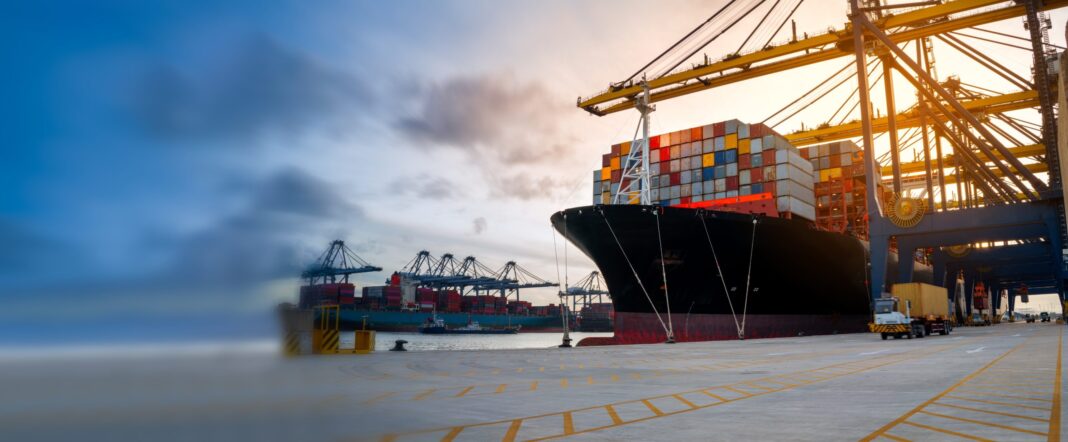
The same willingness to rethink conventional approaches led to one of Wynn Transport’s most distinctive developments: the heavy transport vessel Terra Marique (main photo).
The idea emerged after the company encountered difficulties securing road approvals for major power station equipment. Rather than continuing to search for increasingly complex road solutions, Wynn looked at the waterway running close to the destination.
“We noticed that the River Trent ran past the power station,” he recalls.
That observation ultimately led to a new approach: using inland waterways to transport heavy cargoes before completing the final stage by road.
More than two decades later, Terra Marique is supporting increasingly complex deliveries, including beach landings for remote energy infrastructure projects. Wynn believes such multimodal solutions will become increasingly important as the energy transition drives demand for larger and heavier equipment.
‘Sites becoming more remote’
“The equipment is getting heavier, sites are becoming more remote and infrastructure isn’t getting any younger,” he says. “So she is really coming into her own now.”
Despite the company’s long history, Wynn says the future depends on maintaining the same curiosity that has driven previous generations.
That culture was established by earlier family members, including his grandfather’s generation and his father, who helped develop Wynn Transport’s reputation for innovation in heavy haulage.
Today, the next generation is already becoming involved, with Wynn’s son Harry serving as master of Terra Marique after gaining experience outside the family business before returning. At the recent Breakbulk Europe event in Rotterdam Harry was named one of the NextWave 30 ‘Class of 26’.
Image: Breakbulk Europe
So for Wynn, that continuity is important, but so is recognising that the challenges facing the industry are constantly changing.
“We’re standing on other people’s shoulders,” he says. “All we’re doing is building on what has been done before.”
For the Wynns group of companies, the solutions to tomorrow’s heavy transport challenges may not always come from somewhere new. Sometimes, they may come from revisiting ideas that were ahead of their time.