

Disclosure
Next week, the Port of Santos is expected to host an operation considered historic for Brazilian shipping.
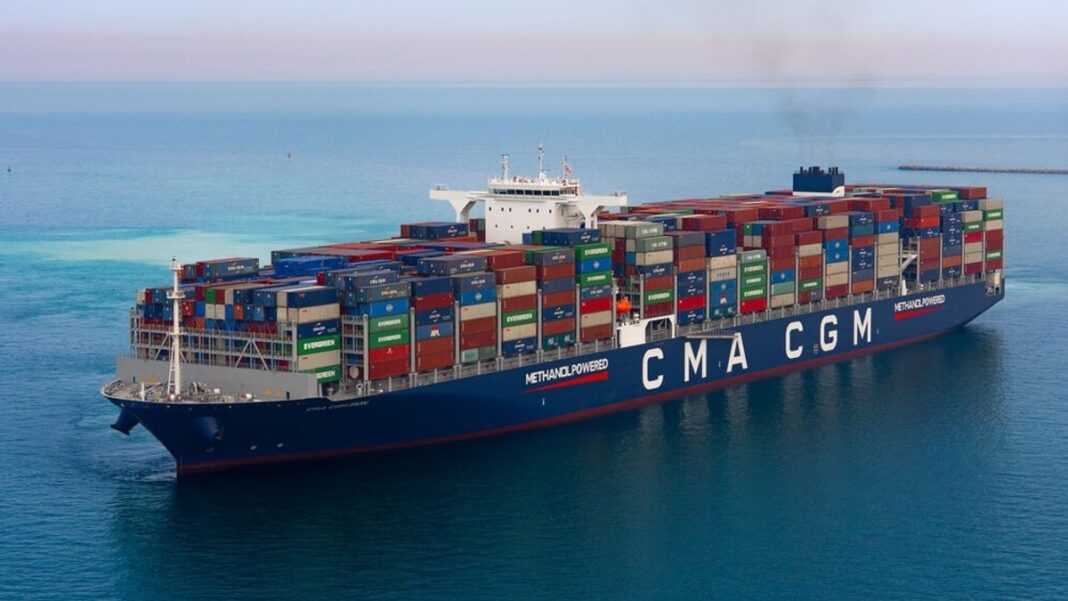
For the first time, a ship from French shipowner CMA CGM will be supplied with ethanol in a bunkering operation off the Brazilian coast, an initiative that marks a new step towards the energy transition in maritime transport.
Super Rectangle (728×90) – Position 17
The project is the result of a partnership between CMA CGM and Copersucar, one of the largest sugar and ethanol traders in the world.
The operation seeks to demonstrate the logistical and operational viability of ethanol as a low-carbon fuel for commercial vessels, reinforcing Brazil’s leading role in the production of biofuels.
The expectation is that the supply will function as a proof of concept for future commercial-scale operations.
In addition to reducing greenhouse gas emissions, the use of ethanol takes advantage of an already consolidated production chain in the country, becoming a competitive alternative to meet global shipping decarbonization goals.
Before refueling, Copersucar needed to obtain authorization from the National Petroleum, Natural Gas and Biofuels Agency (ANP) to conduct the experimental operation.
The project also involves companies specialized in maritime supply and port logistics, using an adapted barge to transport ethanol to the vessel docked at the Port of Santos container terminal.
The initiative comes at a time when the global maritime industry is accelerating the search for alternative fuels to meet the environmental requirements established by the International Maritime Organization (IMO).
While methanol, ammonia, hydrogen and LNG have been developed in several markets, ethanol appears as an especially attractive option for Brazil due to the wide availability of the raw material, the existing infrastructure and the lower environmental impact.
Industry experts assess that the country has unique conditions to become an important international supplier of renewable fuels for navigation, taking advantage of its leadership in the production of sugarcane ethanol and its logistics structure focused on exports.
According to experts, the operation is part of the company’s global strategy aimed at reducing carbon emissions and adopting more sustainable energy solutions in its fleet.
The company has been investing in different technologies and alternative fuels to accelerate the decarbonization process of maritime transport.
If the results confirm the operational and environmental efficiency of the project, the supply carried out in Santos could serve as a model for new operations in other Brazilian ports, strengthening the country’s position as an international reference in the use of biofuels for commercial navigation.