
Key Aspects:
- The final NCL sailing of Norwegian Sky has been shortened by three days to avoid the Persian Gulf and Strait of Hormuz.
- Muscat, Oman will now be the last port for the ship and guests will enjoy an overnight visit before debarkation on September 27.
- Following this final cruise, the ship is transferring to Cordelia Cruises in India and will no longer sail for Norwegian Cruise Line.
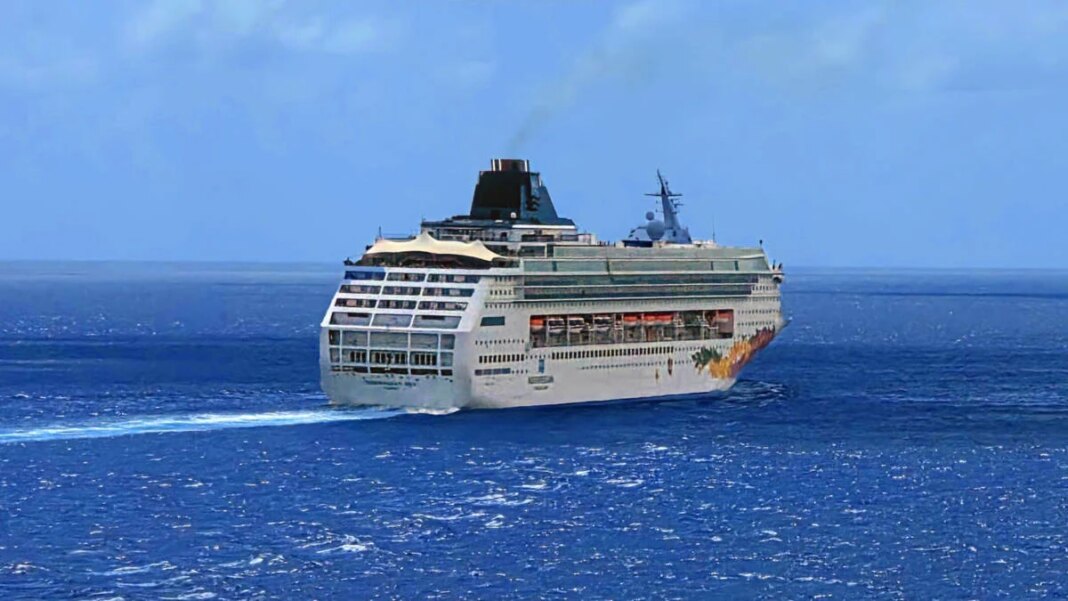
A cruise ship’s final sailing is always an emotional voyage, but the very last sailing of Norwegian Sky has built up more tension than most farewell cruises.
Because the ship’s final 21-day voyage departing Greece on September 9, 2026 was scheduled to pass through the Strait of Hormuz into the Persian Gulf and end in Dubai on September 30, many travelers have been concerned about safety.
Norwegian Cruise Line has now adapted that final itinerary to remove Dubai and a port visit in Qatar, as well as eliminate the Strait of Hormuz from the route, creating a safer experience as the ship’s last cruise under the NCL brand.
Because of the changes, the voyage will no longer be a three-week journey. The sailing has been shortened by three days to an 18-day itinerary that will now end in Muscat, Oman, notably outside the Persian Gulf.
“While the voyage is still several months away, we believe a proactive approach is appropriate given evolving conditions in the Middle East,” the cruise line notified travel partners and booked guests. “We are revising the itinerary accordingly, and we will continue to monitor the situation for the safety and security of all aboard.”
Fortunately, most of the original itinerary is preserved and guests will still depart Piraeus (Athens), Greece on September 9. Visits to destinations in Greece, Egypt, Jordan, and Saudi Arabia are still on the itinerary, including an overnight in Safaga (Luxor) from 9 a.m. on Wednesday, September 16 to 10 p.m. on Thursday, September 17.
The visit to Jeddah, Saudi Arabia on Monday, September 21 is the last port stop on the itinerary, followed by four days at sea before arriving in Muscat, Oman on Saturday, September 26.
Debarkation will follow an overnight stay in Muscat, with guests departing as early as 7 a.m. on Sunday morning, September 27.
Why Is the Cruise Changed?
Continuing tensions in the Middle East have made it unsafe for many cruises to operate in the Persian Gulf, especially due to risks in crossing through the Strait of Hormuz.
Cruise Hive reported extensively on disruptions to cruise ships when the tensions began in late February 2026, including stranded ships, cancelled sailings, and emergency preparation onboard different vessels.
As the tensions continue with no certainty of a peaceful resolution before Norwegian Sky‘s last sailing, it is the safer choice to alter the cruise to avoid the riskiest area on the itinerary.
Compensation to Guests
Because of the dramatic changes, Norwegian Cruise Line is offering compensation to guests booked on the unique farewell cruise.
First, all guests are receiving a prorated refund of 15 percent of their original cruise fare. This is equivalent to the number of missed days for the now-shortened sailing.
Furthermore, guests will also get a 15 percent future cruise credit that can be used for any other Norwegian Cruise Line sailing through December 31, 2027. The new cruise can be on any Norwegian ship sailing anywhere in the world for any itinerary length.
Read Also: Norwegian Cruise Ships by Age – Newest to Oldest
If guests still feel uneasy about the itinerary or simply prefer not to sail on the adjusted cruise, they can cancel for a full refund without any penalties.
The cruise line has also noted that it will adjust any flights or transfers booked through the cruise line to match the new itinerary, as well as refund any pre-paid tours for the now-cancelled visits to Doha and Dubai.
Where Will Norwegian Sky Go?
It was announced in April 2025 that Norwegian Skyalong with Norwegian Sunwould be leaving the fleet and sold to Cordelia Cruises, a small cruise line based in India.
Both ships are first being chartered to Cordelia Cruises before being sold completely. Each vessel will be renovated to meet the new cruise line’s image and expectations. Details on those updates have not yet been released.
While Norwegian Sky is leaving in just a few more weeks, Norwegian Sun‘s last sailing with NCL will be in late 2027.