
The United Arab Emirates increased crude oil production sharply in June after leaving OPEC, taking output to near-record levels as Gulf oil exports recovered from disruptions linked to the Iran conflict and concerns shifted from supply shortages to higher crude availability in the market.
The UAE produced more than 3.8 million barrels per day (bpd) in June, its highest level since April 2020, according to two sources familiar with production data.
The International Energy Agency (IEA) estimated output was even higher at 4.1 million bpd, saying it was the country’s highest monthly average on record, surpassing the previous peak of 4 million bpd reached during the 2020 oil price war.
The increase came after the UAE left OPEC and OPEC+ on May 1, ending production limits imposed under the group’s quota system.
When announcing the decision, Energy Minister Suhail al-Mazrouei said the UAE had invested heavily in expanding production capacity and owed it to investors to supply what global markets needed “without restrictions.”
The rise in production comes as oil markets have shifted from concerns over supply disruptions during the U.S.-Israeli conflict with Iran to expectations of higher crude supply.
Brent crude, which rose above $126 a barrel in late April, was trading at around $72 a barrel on Monday, close to where it was before the Iran conflict began in late February.
Neither Abu Dhabi National Oil Company (ADNOC) nor the UAE’s energy ministry responded to Reuters requests for comment.
There are differences between the UAE’s official production figures and the IEA’s estimates.
The UAE told OPEC it produced 2.11 million bpd in May, when conflict-related shutdowns were at their highest, down from about 3.40 million bpd in February. The IEA estimated production at 2.8 million bpd in May and 3.64 million bpd in February.
According to the IEA, the UAE increased production more quickly than any other Gulf producer after the Iran conflict.
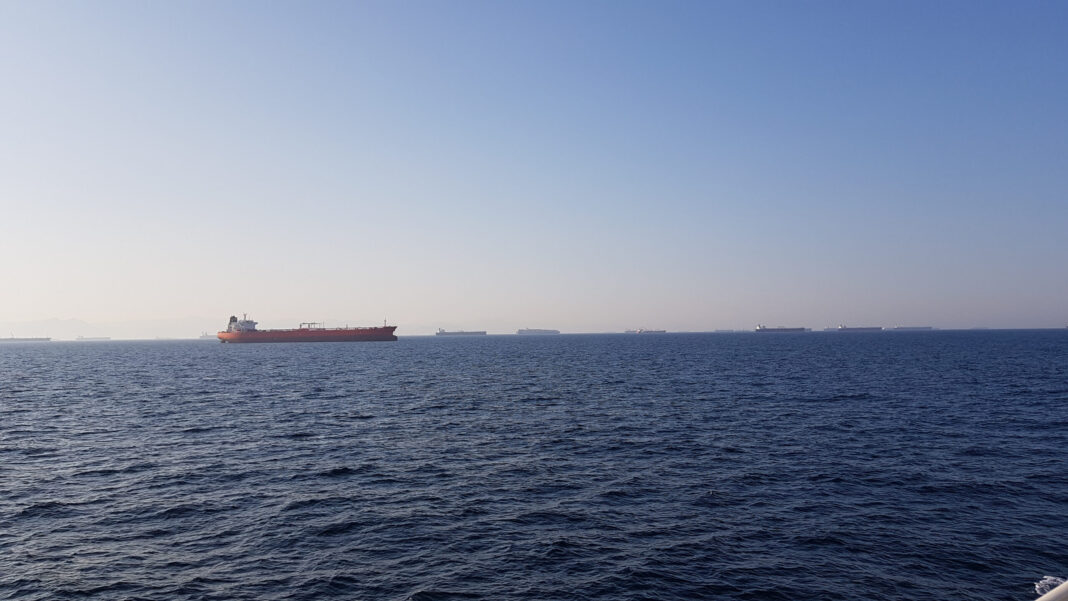
The agency said Abu Dhabi used its own tanker fleet and also chartered additional vessels operated by South Korea’s Sinokor Group, which now manages the world’s largest fleet of oil supertankers.
It added that many of those vessels operated with their Automatic Identification System (AIS) transponders switched off while transporting crude from the Persian Gulf.
The IEA said most of the production recovery happened before recent attacks on commercial shipping in the Strait of Hormuz.
It added that recovering oil flows from the Persian Gulf, along with the fragile peace agreement between US and Iran, had helped shift the market from fears of supply shortages to signs of oversupply, reversing much of the earlier rise in oil prices.
However, the outlook became less certain after U.S. President Donald Trump said the ceasefire was effectively over following renewed hostilities in the Persian Gulf.
According to the IEA, U.S. forces struck sites in Iran for two consecutive days, while Iran fired on Bahrain and Kuwait. Brent crude rose above $80 a barrel earlier in the week before falling below $76 a barrel on Friday.
Other Gulf producers also increased production, although they remained below pre-conflict levels.
According to Vortexa, Saudi Arabia’s crude exports averaged 4.32 million bpd in June, around 3 million bpd lower than in February. Kuwait’s output rose to 1.65 million bpd, about three times higher than in May but still nearly 1 million bpd below pre-conflict levels.
Iraq, OPEC’s second-largest producer, exported about 780,000 bpd in June, roughly one-fifth of the volume shipped before the conflict, Vortexa data showed.
The IEA estimated that Saudi Arabia produced 7.3 million bpd in June, 900,000 bpd more than the previous month, while Kuwait produced 1.4 million bpd and Iraq produced 2 million bpd.
Traders told Reuters that ADNOC has also been selling crude through tenders at discounted prices as more supplies become available.
References: Bloomberg, Reuters
Disclaimer :
The information on this website is for general purposes only. While efforts are made to ensure accuracy, we make no warranties of any kind regarding completeness, reliability, or suitability. Any reliance you place on such information is at your own risk. We are not liable for any loss or damage arising from the use of this website.
Maritime Courses For The Smart Mariners
Gain practical knowledge that helps you perform better onboard, prepare for promotions, and grow with confidence.
Disclaimer :
The information on this website is for general purposes only. While efforts are made to ensure accuracy, we make no warranties of any kind regarding completeness, reliability, or suitability. Any reliance you place on such information is at your own risk. We are not liable for any loss or damage arising from the use of this website.