
A 468 million-euro multimodal logistics park with its own rail freight terminal is moving closer to construction on Portugal’s Lisbon–Sines corridor. The project is intended to address the country’s shortage of large logistics sites and strengthen the route as a gateway linking the Port of Sines with markets across Iberia and wider Europe.
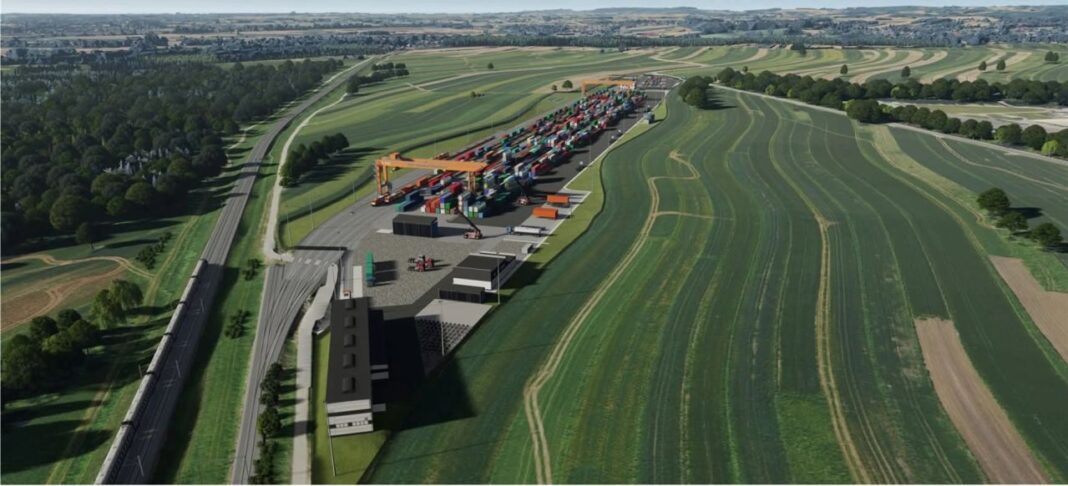
The Grândola Logistics Park Euro-Atlantic would occupy a 1.3 million square-metre site around 100 kilometres south of Lisbon and 50 kilometres north of the Port of Sines, between the IC1 road and the Southern Railway Line. The site is positioned on the wider Sines–Évora/Caia freight corridor towards Spain, where railway upgrades are intended to cut journey times and increase capacity from Sines to 51 daily freight trains of up to 750 metres.
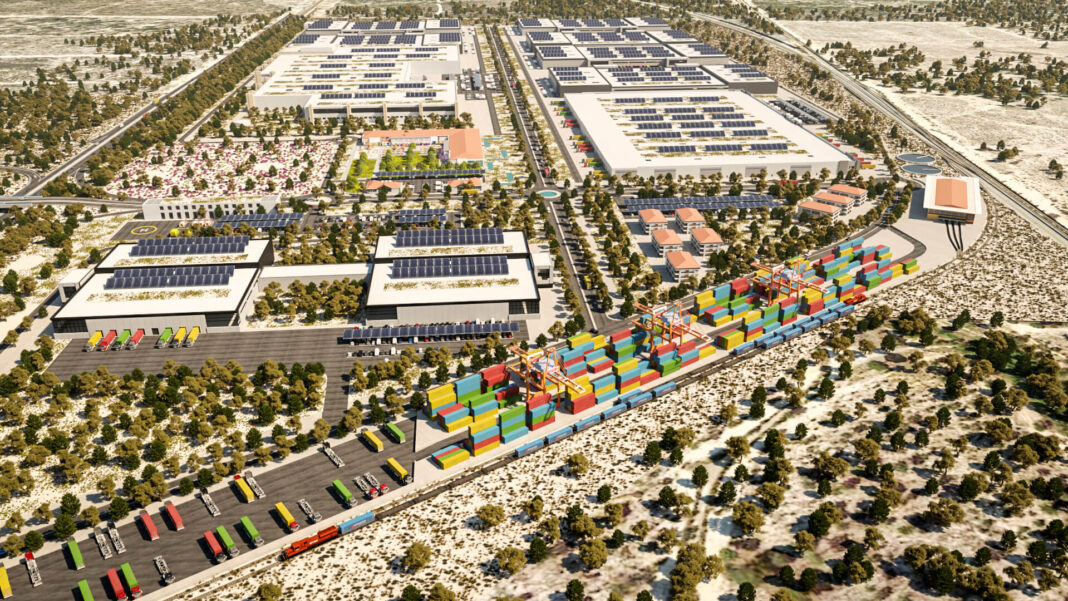
Qantara Capital plans 635,000 square metres of buildings alongside a rail freight terminal with a 23,000 square metres container yard. Preliminary designs show four internal railway lines, while the wider development would be divided into seven large plots, with logistics accounting for 80% of the intended use and industrial activities the remaining 20%.
Approvals pending
First presented in 2021, the project was then expected to start construction in 2023 and open in 2024. However, it appears the scheme has now moved forward again after public consultation on its environmental impact study closed on 2 July.
According to the developer, the scheme received conditional approval at a procedural planning conference in February 2025, with the Environmental Impact Declaration, municipal detailed plan and final permits still required before work can begin.
Qatar Capital says it will start infrastructure works once those approvals are in place. “By connecting this multimodal infrastructure to the Port of Sines and the main European transport networks, we are opening a key gateway for international trade and strengthening Portugal’s position in global supply chains,” said Hadrien Fraissinet, CEO of Qantara Capital.
Phased development
Around 40 million euros of the investment is earmarked for infrastructure, including the rail terminal, heavy-vehicle parking and a new grade-separated junction with the IC1. The initial works are expected to take around two years, largely because of the new road connection.
Development would then proceed plot by plot, with each taking one to two years depending on commercialisation. The documents allow for a build-out period of up to 10 years, although they say the entire park could be completed in four if all plots were developed in parallel.
The park will use a built-to-suit model, with facilities developed around the technical requirements of individual occupiers and leased under long-term agreements. It is designed for around 1,000 daily users, with the developer citing a labour pool of approximately 33,000 people within a 30-minute journey.
The current masterplan also lists dedicated truck and container parking, charging for electric commercial vehicles and a hydrogen refuelling station. Solar generation is planned across building roofs and parking areas, while 410,000 square metres, almost one-third of the site, would remain as green space.
What remains unclear is who would operate the terminal and what traffic would underpin it. No operator or anchor customer has been named, and the documents give no indication of expected train volumes or when rail services might begin.
Rail role questioned
The public consultation attracted 17 submissionsof which five opposed the project, two supported it and ten proposed changes. Several called for the railway connection to be prioritised to prevent the development becoming predominantly dependent on road freight.
Environmental association ZERO welcomed the inclusion of a freight terminal but warned that providing a railway platform would not by itself guarantee modal shift. It called for an intermodal operating plan covering minimum rail-share targets, Southern Line capacity, compatibility with longer freight trains, suitable loading areas and electric container-handling equipment.
Without firm operational commitments, it added, the park could function mainly as a road logistics platform.