
Disclosure
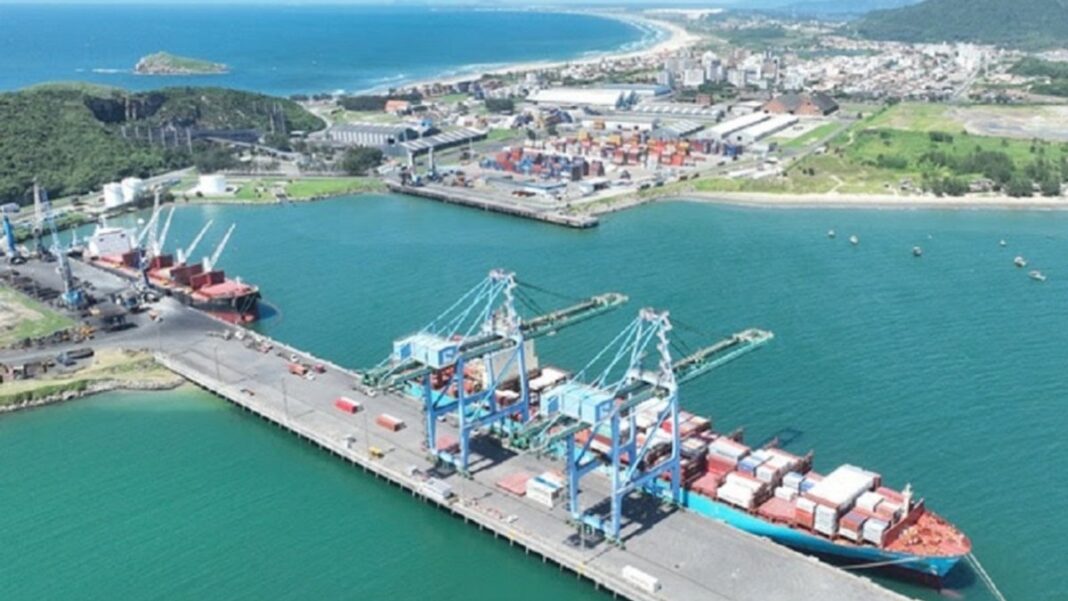
Santos Brasil completed the implementation of a new Terminal Operating System (TOS) at Tecon Imbituba (SC), taking another step in its strategy of technological modernization and standardization of port operations. The OPUS system, developed by the South Korean company CyberLogitec, replaces the previous platform and now manages all operations at the Santa Catarina terminal in an integrated manner.
With the new feature, Tecon Imbituba will operate with the same platform already used in the company’s terminals in Santos (SP) and Vila do Conde (PA), unifying the processes of documentation, automation and management of the flow of cargo and ships across the company’s entire network of container terminals.
Super Rectangle (728×90) – Position 17
More productivity and predictability
According to Santos Brasil, OPUS was developed to modernize and optimize container operations, integrating yard, gate and pier flows. The expectation is to increase levels of productivity, operational planning, safety and predictability of operations, providing more agile service to customers.
The system concentrates real-time information on the movement of cargo and vessels, allowing greater integration between equipment, processes and operational teams.
Investments exceeding R$34 million
The implementation of the new TOS is part of an investment program of more than R$34 million aimed at modernizing Tecon Imbituba.
In addition to replacing operating software, the package includes:
equipment renewal;
infrastructure improvements;
expansion of the terminal’s operational capacity;
investments in automation and digitalization of processes.
Technology already validated in other terminals
OPUS already operates successfully at Tecon Santos, the largest container terminal in South America, and at Tecon Vila do Conde, in Pará. With the implementation in Imbituba, Santos Brasil now uses a single platform in its three main container terminals, simplifying operational management and facilitating the adoption of new technologies.
The platform was chosen for its ability to integrate with advanced features such as operational automation, optical character recognition (OCR), real-time monitoring and future applications based on artificial intelligence and digitalization of operations.
Growth strategy
Technological modernization is part of Santos Brasil’s strategy of increasing operational efficiency and preparing its terminals for the growth in demand for container movement.
In recent years, the company has been investing simultaneously in infrastructure, equipment and digital transformation to increase productivity, reduce operational times and offer greater reliability to shipowners, importers and exporters.