
China and Russia are seeking to build a fifth rail border crossing in the Far East. The new railway should help Beijing secure energy and resource imports, even through capacity-restricting winter weather.
The Chinese province of Heilongjiang published a feasibility study tender notice in April. With a new railway, it hopes to bridge the Amur river, which demarcates the border between Russia and China.
Once complete, the 1.3 billion-euro border crossing should connect Chinese Heihe with the Russian city of Blagoveshchensk. It will also link up to the Trans-Siberian railway and serve as the fifth rail border crossing between the two countries.
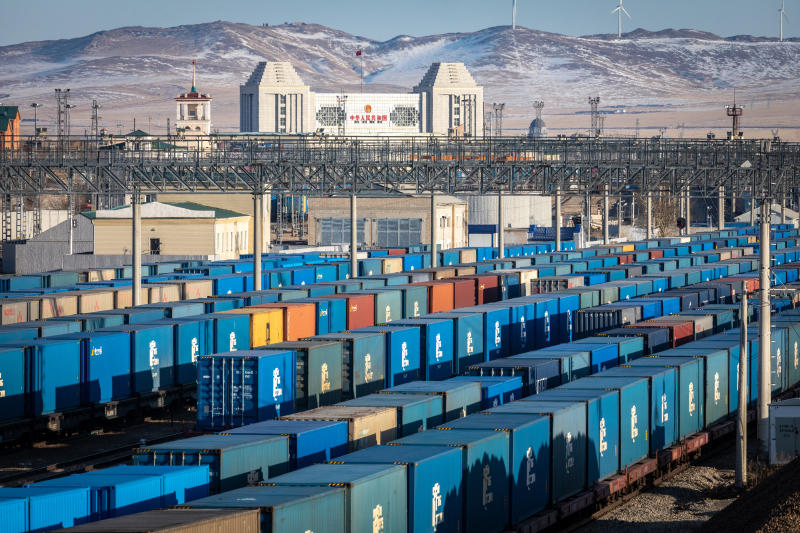
The Heilongjiang province already hosts two such border crossings at Suifenhe and Tongjiang. There are also border crossings at Manzhouli and Hunchun.
Winter challenges
Transportation between Heihe and Blagoveshchensk is now conducted via a tolled road bridge and a narrow waterway. Their capacity shrinks in the harsh winter months, writes the South China Morning Post. The addition of a rail link should help reduce the weather impact.
China hopes to “open up to Russia” and to “revitalise Northeast China” with the project. Besides coping with harsh weather, the railway should resolve the problem of low capacity at Heihe port. The ultimate objective is to secure high-capacity and low-cost cross-border rail connectivity that ensure energy and resource import channels for China.
Not much is clear about the specifics of the future railway. The feasibility study’s aim is to find efficient track-alignment solutions to connect to the Russian rail network, says SCMP.
Earlier this year, the Chinese ambassador to Russia suggested that the two countries should build more convenient border crossings. The official saw the Tongjiang-Nizhnelininskoye 2022 rail bridge as an example. The bridge has since become an important artery for coal and iron ores to enter China.
Subscribe to gain access to all news
Already have a subscription? Log in.
Choose your subscription
Considering a corporate subscription? Contact us to find out more.
Or
Want to read this article for free?
You can read one free article per month. Enter your email and we’ll send you a free link to access the full article. No payment required.