
Air cargo’s squeeze makes the case for AI-driven cargo technology
Air cargo demand is surging, but capacity, pricing, compliance and fuel costs are squeezing carriers. See how AI-driven cargo technology helps.

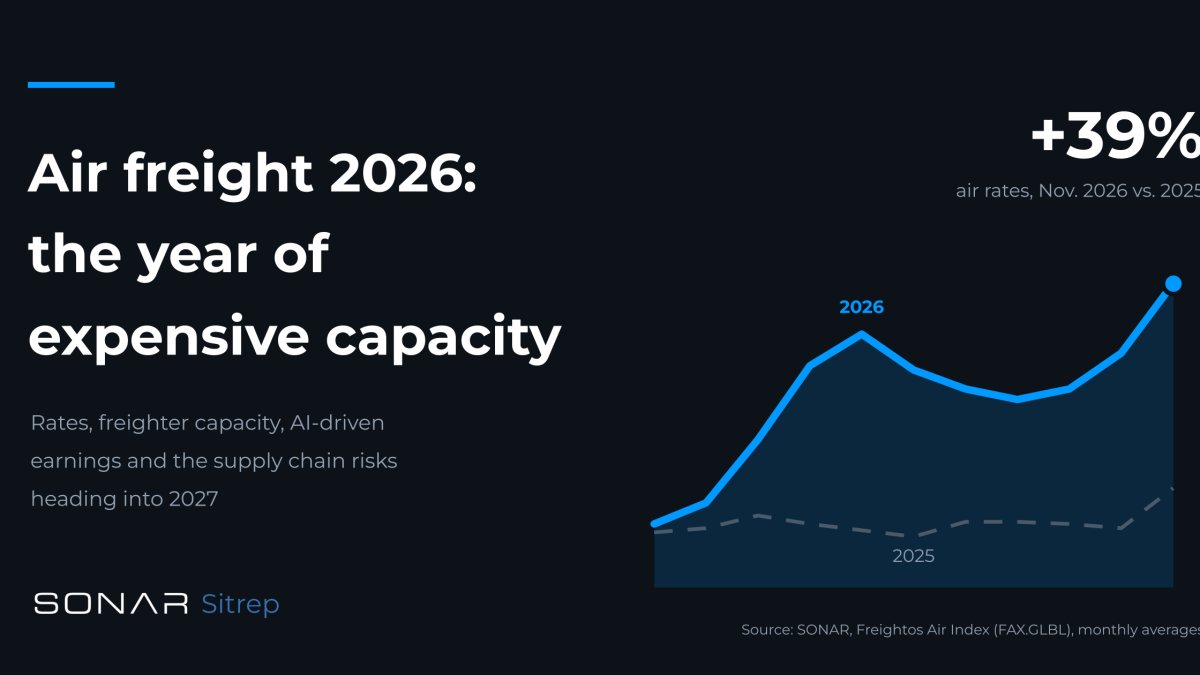
Air cargo is heading into peak season with a familiar mix of good news and bad. Global demand was up 6% year over year in October, according to Xeneta, and spot rates averaged $3.11 per kilogram. FreightWaves puts rates up about 30% year over year. On paper, that looks like a strong market. On the ramp, in the warehouse and at the booking desk, it looks like something else: a system straining to move more freight through capacity that rarely sits where shippers need it.
The question for airlines, forwarders and shippers isn’t whether these pressures will ease. Some will, some won’t. The real question is which of them are structural, and which are the cost of running a modern, data-heavy business on technology built for a slower era.
The good news is that a new generation of cloud-native, AI-driven cargo platforms is turning each of these pressures into something carriers can manage, and in many cases monetize.
Freighter additions remain limited, and passenger belly capacity follows passenger demand, not cargo demand. IATA data show August volumes from Asia to North America up 15% year over year, while Asia–Europe fell 8%. The pressure is concentrated on routes from Vietnam, Thailand and Taiwan to the U.S., while other corridors fly with room to spare.
This story was originally published by FreightWaves. Read the full story at FreightWaves →


Conversation