
Airbus sees 46% freighter increase by 2045 amid stable air cargo growth
The Airbus 20-year outlook for freighter demand is little changed from last year, showing a global fleet nearly 50% larger than today.
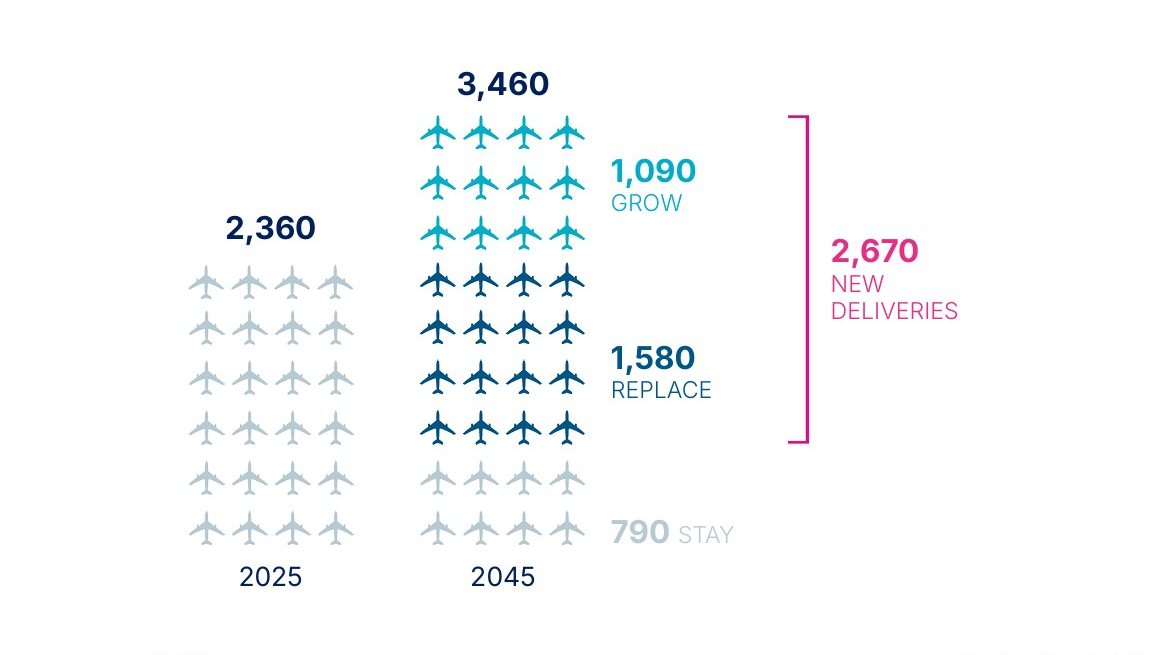
There wasn’t much change in Airbus’ latest 20-year forecast for air cargo. The manufacturer, which plans to begin delivering an all-new A350 freighter in about a year, estimated annual cargo traffic growth would tick down a tenth of a point compared to last year’s report, but that the industry would require a few more planes than previously thought.
Airbus projected that the global fleet of cargo jets will grow 46% by 2045, requiring 2,670 new aircraft — 65 more than in last year’s report. The majority of new freighters will come in the form of replacements for older existing equipment, with nearly 1,100 for growth to accommodate an estimated 3.2% compound annual growth rate in air cargo volumes. Of the total influx, 970 airframes will be factory-built, with 1,700 aircraft entering the fleet as passenger-to-freighter conversions, according to the company’s market forecast released on Wednesday.
A year ago, Airbus said it expected 45% growth in the global freighter fleet, with 2,605 new aircraft combined with 815 existing aircraft. The total fleet estimate in the 2026 report is for 3,460 aircraft, a difference of 40 additional aircraft versus the prior forecast.
Fifty-seven percent of the demand for 2,670 aircraft will be in medium and large widebody freighters used in long-haul and transcontinental transportation.
This story was originally published by FreightWaves. Read the full story at FreightWaves →

Conversation