
Barrels Without Borders? Alaska's Oil Revival and the Jones Act Fleet
On November 10, the Energy Information Administration (EIA) published its latest Short-Term Energy Outlook (STEO). In this report, the EIA stated that...
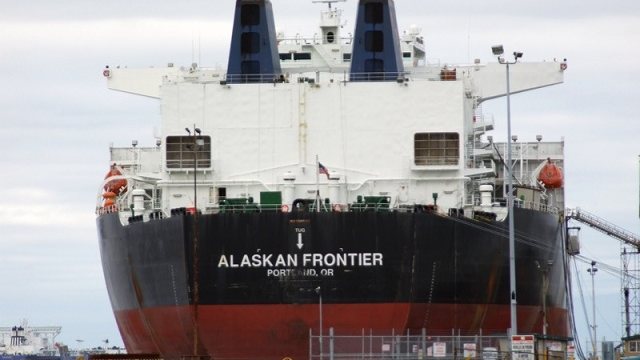
On November 10, the Energy Information Administration (EIA) published its latest Short-Term Energy Outlook (STEO). In this report, the EIA stated that, after decades of decline, crude oil production in Alaska is growing again, driven by two projects on Alaska's North Slope. The EIA projects that Alaskan production will grow by 23,000 b/d (6%) in 2026, followed by a 60,000 b/d increase in 2027. If this growth is realized, Alaska will produce 505,000 b/d in 2027, the highest output since 2014.
According to the EIA, the last time Alaska saw production increases of this magnitude was in the 1980s, when production peaked at 2.0 Mb/d. At that time, Alaska was the biggest oil-producing state in the United States. While the recent increases in Alaskan output are noteworthy, they pale in comparison to the production boost that is expected when ConocoPhillips' massive Willow development comes online in 2029. At peak production, Willow could add up to 180,000 b/d to Alaska's output.
Alaska's crude oil production expanded dramatically after major discoveries in the Kenai Peninsula (1957) and Prudhoe Bay (1968) on Alaska's North Slope. In 1971, the U.S. Congress passed the Alaska Native Claims Settlement Act, helping clear hurdles for major infrastructure projects such as the 800-mile Trans-Alaska Pipeline System (TAPS). The pipeline, which connects the North Slope oil field in northern Alaska with the port of Valdez on the Pacific coast, was built between 1973 and 1977.
After the first shipment in July 1977, exports grew as production expanded. By the end of 1980, production reached 1.5 Mb/d, peaking at 2.0 Mb/d in late 1987/early 1988.
This story was originally published by The Maritime Executive. Read the full story at The Maritime Executive →

Conversation