
Closing the Sea: Lessons from Ancient Mediterranean Blockades
Nearly a century ago, Rear Admiral William A. Moffett, U.S.N., wrote in the foreword to Arthur M. Shepard’s seminal work, Sea Power in Ancient History...
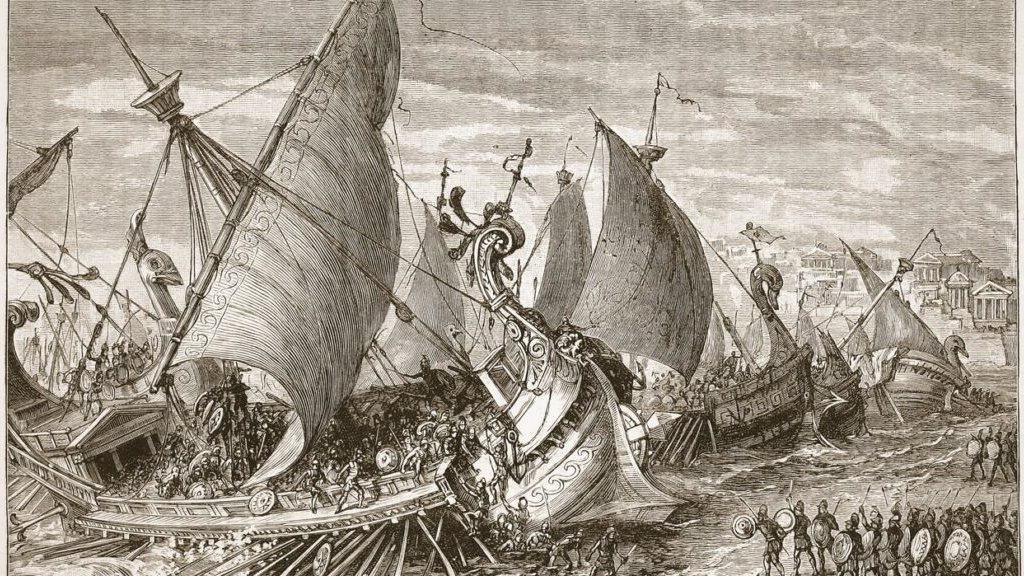
Nearly a century ago, Rear Admiral William A. Moffett, U.S.N., wrote in the foreword to Arthur M. Shepard’s seminal work, Sea Power in Ancient History, that “Readers of this work cannot but be impressed by the similarity between the problems of sea power in ancient times and problems of sea power which are engaging the attention of maritime nations today.” Practitioners of naval power have long looked to the past for warnings, lessons, and insights that might inform the challenges of the present and future. This post follows in that tradition by considering what antiquity might offer for understanding one of the most enduring applications of naval power, the blockade.
The British naval theorist Julian Corbett distinguished between commercial blockade, intended to restrict an enemy’s maritime trade, and naval blockade, directed against an enemy’s fleet. The latter could itself serve different purposes, either keeping an enemy fleet confined to port or watching it closely while encouraging it to put to sea, where it could be brought to battle. Although Corbett developed these categories from the experience of more recent naval warfare, their basic purposes would have been readily recognizable in antiquity. Ancient fleets likewise sought to restrict maritime commerce and supplies, contain hostile naval forces, or compel an adversary’s fleet to come out and fight.
This story was originally published by The Maritime Executive. Read the full story at The Maritime Executive →
Conversation