
Control centre communication in focus as Spain faces rail safety reckoning
SPAIN: A serious failure of communications is at the heart of early investigations into the fatal collision between two high speed trains at Urda near Toledo on October 28. Mike Bent analyses how the…
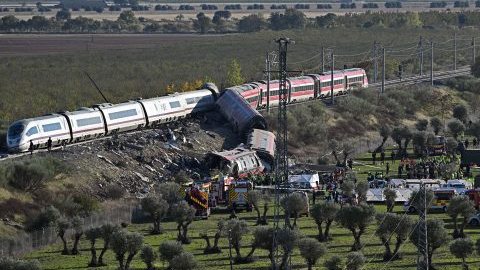
SPAIN: A serious failure of communications is at the heart of early investigations into the fatal collision between two high speed trains at Urda near Toledo on October 28. Mike Bent analyses how the tragedy unfolded.
The 07.53 Madrid Atocha to Sevilla RENFE Viajeros AVE service, operated by Siemens Mobility Velaro trainset 103-206, was travelling at a speed in excess of 100 km/h when it struck the rear of the stationary 07.40 Madrid to Sevilla Iryo service, formed of a Hitachi Rail-built Series 109 ETR1000 trainset, near the village of Urda in Toledo province, 120 km from Madrid.
The rearmost three cars of the S109 were knocked down an embankment, while the leading car of the S103 was derailed, falling down the other side of the embankment. Three of the cars behind it were also derailed, but remained almost upright.
Onboard the S109 were 147 passengers, while the Renfe train was carrying 397. By midday on October 29, the number of fatalities had risen to 69, with several passengers still unaccounted for. Initial reports found that 40 of the victims were onboard the S109, with 24 on the S103 trainset.
This story was originally published by Railway Gazette. Read the full story at Railway Gazette →
Conversation