
Dynamic Coupling: a blueprint for more capacity and competitiveness?
European rail freight is looking for all sorts of ways to operate more economically, efficiently and to create more capacity for itself. Flagship projects include…
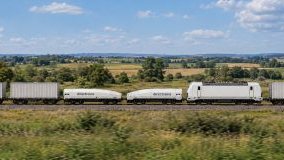
European rail freight is looking for all sorts of ways to operate more economically, efficiently and to create more capacity for itself. Flagship projects include ERTMS and the Digital Automatic Coupler (DAC), but the DC-FREIGHT consortium is working on an entirely different solution: Dynamic Coupling. Dynamic Coupling aims to let trains and wagon groups join and split while moving. In this way, services can share a train path and separate where their destinations diverge. The expectation is that this will grow capacity on congested railways by freeing up train paths, bringing advantages similar to those of DAC and moving-block operation. However, it does not compete with those technologies, says Alberto Mandler, co-founder and CEO of tech company DirecTrainS.
With low speed differences, the technology would allow dynamic (de)coupling between two trains. It has shown promising results in early trials, according to Mandler (more on that below). The first product is a driver aid at up to 40 kilometres per hour. Later products are planned for much higher speeds. Dynamic Coupling would come with the added benefit that it does not require high initial capital expenditures.
Besides capacity gains, Dynamic Coupling could also convert road freight into rail freight, believes DirecTrainS. The developer points to four constraints that make rail lose the battle versus the road: fixed train compositions, entire trains occupying mainline capacity to deliver just a few wagons, poor data integration and little adaptability to disruptions.
This story was originally published by RailFreight.com. Read the full story at RailFreight.com →

Conversation