
Fraunhofer IFAM Establishes Validation Chain for Autonomous Systems in Offshore Wind
With USD$9.87 million (8.85 million euros) in funding from the Federal Ministry for Economic Affairs and Energy (BMWE), Fraunhofer IFAM is establishing a new research infrastructure for wind energy. The FOKUS-Wind project will create…
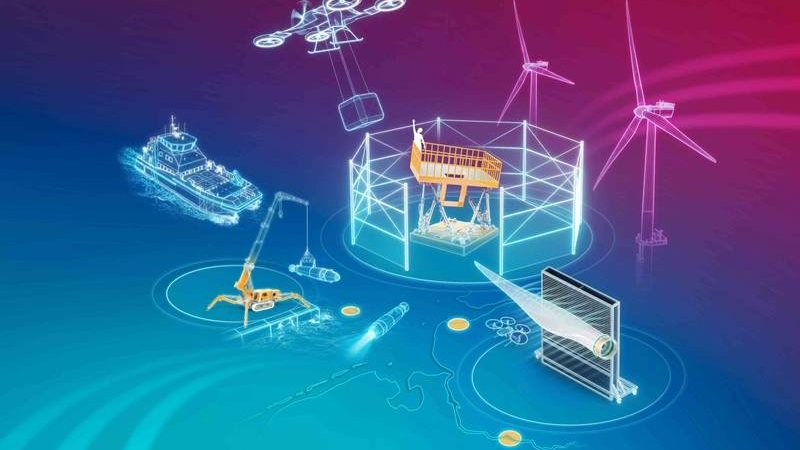
With USD$9.87 million (8.85 million euros) in funding from the Federal Ministry for Economic Affairs and Energy (BMWE), Fraunhofer IFAM is establishing a new research infrastructure for wind energy. The FOKUS-Wind project will create Germany's first end-to-end testing and validation chain for autonomous systems in offshore wind farms across the institute's sites in Bremen, Cuxhaven, and Heligoland. The infrastructure will enable companies and research organizations to develop, test, and qualify drones, robotic systems, and sensors under realistic operating conditions. The aim is to support their reliable and cost-effective use for the inspection, maintenance, and condition monitoring of offshore wind farms.
As offshore wind energy continues to expand, wind farms are being built farther from the coast. This trend increases the complexity, costs, and risks of operation, inspection, and maintenance—activities that already account for a significant share of overall electricity generation costs. Drones, robotic systems, and intelligent sensors can automate workflows, ease the workload of skilled personnel, and make offshore wind farm operations safer and more efficient. However, their widespread deployment depends on suitable facilities for testing and validation under realistic conditions.
Suitable infrastructure for comprehensively testing these technologies under realistic operating conditions is currently lacking. FOKUS-Wind addresses this gap by establishing a large-scale, multi-stage research infrastructure that will enable autonomous systems to be systematically evaluated and qualified for use in typical wind farm scenarios.
The heart of FOKUS-Wind is a cross-site validation chain covering the full range of development and testing stages—from laboratory studies to demonstrations under real-world offshore conditions.
This story was originally published by MarineLink. Read the full story at MarineLink →
Conversation