
From Hormuz to the Red Sea: Can rail arrive before the next disruption?
The Strait of Hormuz and Bab el-Mandeb are testing the resilience of Middle Eastern trade routes at the same time. Attacks on shipping, threats to…
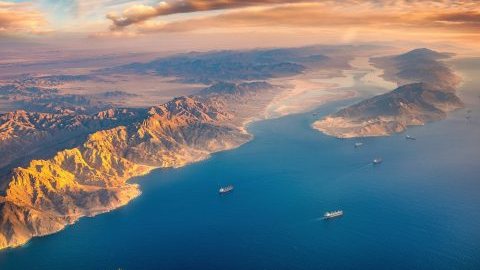
The Strait of Hormuz and Bab el-Mandeb are testing the resilience of Middle Eastern trade routes at the same time. Attacks on shipping, threats to energy infrastructure and doubts over maritime security are pushing operators to rethink their routes, vessel availability and insurance exposure. Even where commercial traffic continues, moving cargo has become more complicated and more expensive. The Red Sea has deteriorated quickly. The Houthis, who declared a maritime embargo on Saudi Arabia in July, seized Yemen’s Red Sea coast as far south as Bab el-Mandeb in early September. On 10 October, a Houthi missile struck a passenger terminal at Riyadh’s King Khalid airport, killing at least 12 people. Even so, some container lines are heading back to the route.
Oil shows how far diversification has gone. According to Kpler, about 40% of Gulf crude now leaves without crossing Hormuz, compared with 17% before the war. In September, 60% of regional crude exports, or 9.9 million barrels per day, still passed through the strait. Another 23% loaded on the Gulf of Oman coast, mainly at Fujairah, and 17% left through the Red Sea. That points to more export routes, not to the end of maritime risk. Rail’s role is the harder question, and the past few weeks have made it more pressing.
Saudi Arabia’s East-West pipeline offers an alternative outlet through Yanbu, while the UAE’s Abu Dhabi to Fujairah pipeline lets crude leave outside Hormuz. Pipelines, however, cannot do the same for containerized goods and general freight.
This story was originally published by RailFreight.com. Read the full story at RailFreight.com →

Conversation