
Hormuz Standoff Leaves Both Sides With Economic Pain
As US President Donald Trump threatens renewed attacks against Iran, Tehran’s intermittent strikes on commercial vessels have left the two sides locked in a painful economic standoff.
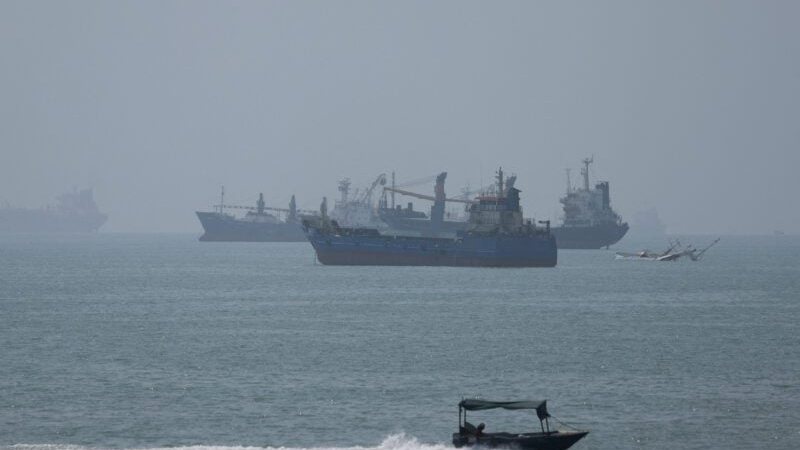
Vessels in the Strait of Hormuz are visible near the beach of Bandar Abbas, Iran, August 28, 2026. Majid Asgaripour/WANA (West Asia News Agency) via REUTERS
(Bloomberg) — As US President Donald Trump threatens renewed attacks against Iran, Tehran’s intermittent strikes on commercial vessels have left the two sides locked in a painful economic standoff.
For Iran, the US blockade of its oil exports has snuffed out a key part of its military funding and severely hobbled the $300 billion economy, with only a tiny fraction of the prewar 2 million barrels per day are leaving the country via land routes.
And for the US, the rising cost of shipping oil through the Strait of Hormuz — even though US Central Command says almost all Iranian attacks there fail or are intercepted — has kept fuel prices high, stirring a political backlash at home with the midterm elections fast approaching.
This story was originally published by gCaptain. Read the full story at gCaptain →


Conversation