
How Fleet Management Strategies Are Reshaping Efficiency in the Construction Supply Chain
The construction industry relies on an intricate network of suppliers and manufacturers, freight operators, equipment suppliers, and transportation companies. Materials...
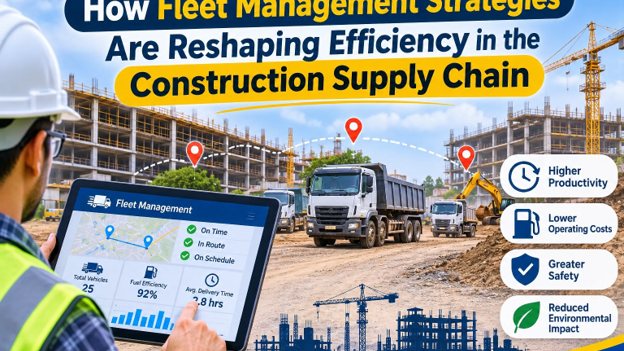
The construction industry relies on an intricate network of suppliers and manufacturers, freight operators, equipment suppliers, and transportation companies. Materials and machinery need to arrive at the worksites at the right time, and frequently cross several transportation networks before arriving at their destinations. The efficient handling of such movements has become more and more important as construction projects grow more complex.
Fleet management is driving a key part of the construction supply chain performance improvement. By optimizing vehicle use, route planning, maintenance schedules, and live tracking, companies can reduce transportation expenses and minimize delivery delays. These strategies also facilitate the coordination of contractors with international suppliers and adapting to changing logistics requirements.
The lack of visibility of vehicles can represent a real problem in construction value chains. If businesses cannot establish the location of shipments or the delivery dates, it is difficult to coordinate the availability of labor, equipment and material.
The answer is fleet management systems, such as GPS tracking, telematics and central transportation dashboards. These technologies enable logistics managers to track the vehicles, review their delivery status and warn of potential delays before they impact on schedule.
This story was originally published by Global Trade Magazine. Read the full story at Global Trade Magazine →

Conversation