
Hybrid-Electric Expedition Cruise Ship Built in Chile Set for Delivery
Chilean shipbuilder ASENAV (Astilleros y Servicios Navales S.A.), the biggest shipyard in Chile, highlighted the departure of the innovative new explo...
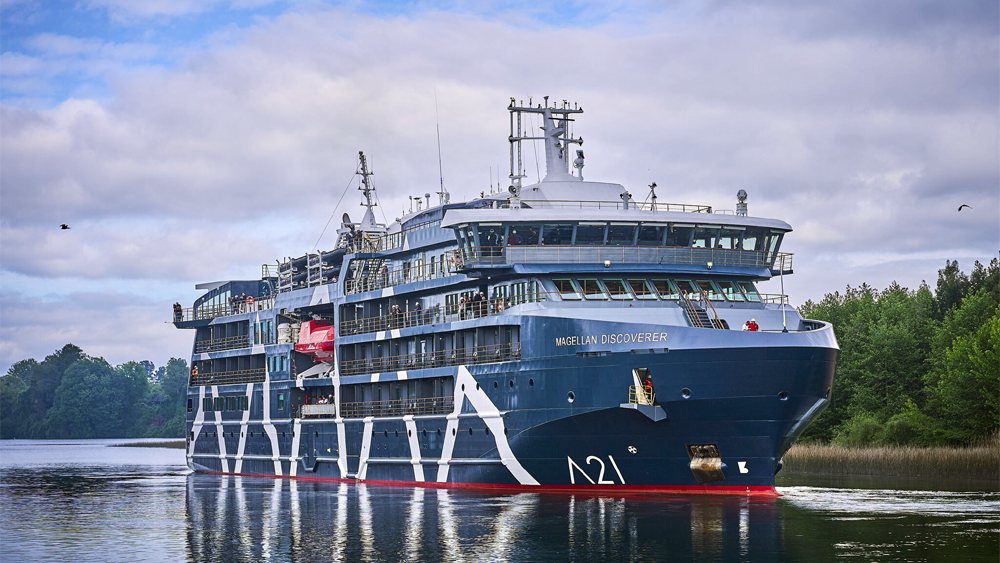
Chilean shipbuilder ASENAV (Astilleros y Servicios Navales S.A.), the biggest shipyard in Chile, highlighted the departure of the innovative new exploration cruise ship Magellan Discoverer from its shipyard this week. The cruise ship, which took about 33 months to build and involved more than 500 employees, contractors, and suppliers, departed ASENAV’s shipyard in Corral for its final trials before delivery and entry into service in December.
The 5,258 gross ton cruise ship is being hailed as the first hybrid-electric expedition cruise ship ever built in the Americas. Designed and built by ASENAV, the ship was created for long-range polar expeditions, and according to its builders and owners, Antarcita21, it will set a new standard for responsible Antarctic explorations. Antarcita21 says, “Every system on board has been engineered to reduce environmental impact while delivering an exceptional expedition experience.”
The hybrid-electric propulsion system is driven by ABB’s Onboard DC Grid, a modular platform that integrates generator power with Corvus Energy Battery Storage System to enable flexible energy management. Power and propulsion come from two MAN main engines and gensets, totaling 4,800 ekW of power for two ABB Azipod units. The marine lithium battery bank was developed by Corvus Energy. It will give the ship a speed in open waters of 14 knots.
ASENAV highlights that the systems optimize energy efficiency while reducing CO2 emissions and underwater noise. The ship was designed to operate in one of the most extreme environments on the planet. The hybrid systems give the vessel the ability to sail for up to 60 days without refueling.
This story was originally published by The Maritime Executive. Read the full story at The Maritime Executive →


Conversation