
In RailFreight Week, a UK growth target reality check
Government ambitions to increase rail freight by 40% by 2040 and 75% by 2050 put the industry under pressure to deliver. In an economy where…
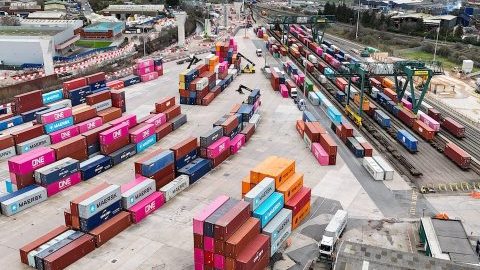
Government ambitions to increase rail freight by 40% by 2040 and 75% by 2050 put the industry under pressure to deliver. In an economy where road transport remains overwhelmingly dominant, that presents huge challenges. Putting those figures into the context of Britain’s wider freight market reveals the scale of the challenge facing the industry. It’s a topic pertinent to RailFreight Week, our series of seminars, running all this week.
The nuanced interim targets, announced by Transport Secretary Heidi Alexander on 8 September 2026, provided a milestone towards the longer-term ambition established in 2023. For the first time, the Government has also specified growth expectations for individual commodity groups. These include 65% for high-value goods, 45% for construction materials and 7% for critical goods, all measured in net tonne-kilometres by 2040, without saying where that tonnage would originate.
Confusing economic growth with an increase in rail’s share of the overall freight market is an unaddressed issue. According to the Department for Transport’s 2024 Transport Statistics, approximately 206 billion tonne-kilometres of domestic freight were moved in the UK. Road accounted for 168 billion, water 21 billion and rail 17 billion. Expressed as market shares, that equates to 82% by road, 10% by water and just 8% by rail. Road therefore moved almost ten times as much freight as rail. Note that rail freight covers Great Britain (England, Scotland and Wales) and that Northern Ireland’s entirely separate transport infrastructure carries no rail freight at all.
This story was originally published by RailFreight.com. Read the full story at RailFreight.com →


Conversation