
JNPA awards ₹76.92 crore shore power contract for Gateway Terminals India
Jawaharlal Nehru Port Authority (JNPA) has awarded a ₹76.92 crore contract to Navi Mumbai-based Leena Powertech Engineers to install shore power at Gateway Terminals India (GTI). Announced on 26 November 2026, the award marks…
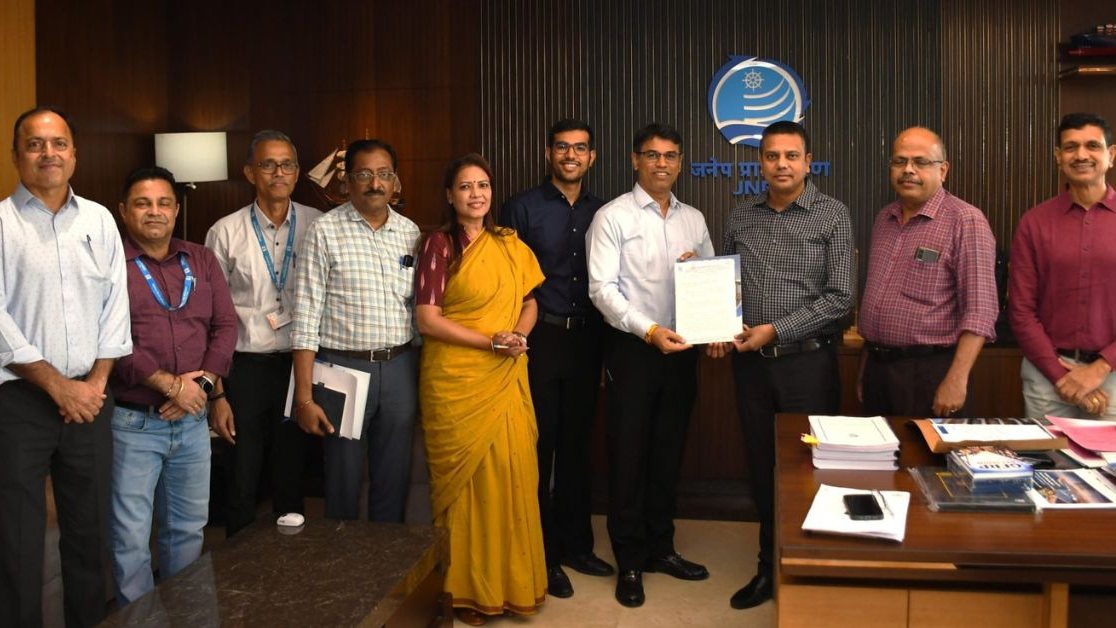
Jawaharlal Nehru Port Authority (JNPA) has awarded a ₹76.92 crore contract to Navi Mumbai-based Leena Powertech Engineers to install shore power at Gateway Terminals India (GTI). Announced on 26 November 2026, the award marks the first phase of JNPA’s programme to supply electricity to visiting ships at berth. Once commissioned, the system will allow compatible container ships to switch off their diesel-powered auxiliary generators while alongside.
Ships normally shut down their main propulsion engines at berth but keep auxiliary generators running to power lighting, ventilation, refrigeration, pumps and other onboard systems. Shore power, also known as cold ironing, lets a compatible vessel draw that electricity through a connection at the quay. This reduces exhaust emissions from the ship at berth, along with generator noise and vibration.
The GTI contract covers supply, installation, testing and commissioning, as well as performance guarantees. The electrical infrastructure will include a 33-kilovolt distribution system, static frequency converters, a 6.6-kilovolt distribution system, specialised cables and shore connection equipment. The converters will match the frequency of the shore supply to the requirements of compatible ships. The installation also includes protection, control and monitoring systems.
For ships that plug in, the immediate benefit is lower emissions at the berth, including nitrogen oxides, sulphur oxides and particulate matter from auxiliary diesel generators. The carbon dioxide savings depend on how the shore electricity is generated. Any saving in operating costs will depend on the electricity tariff and the vessel’s power demand while alongside.
This story was originally published by Maritime Gateway. Read the full story at Maritime Gateway →

Conversation