
Jungheinrich teams with Automha to provide “entry point into warehouse automation”
Material handling equipment provider Jungheinrich has entered into a strategic partnership with intralogistics specialist Automha, saying the two companies have developed a two-way pallet shuttle for high-density pallet storage.According to the partners, their "UP-Carrier…
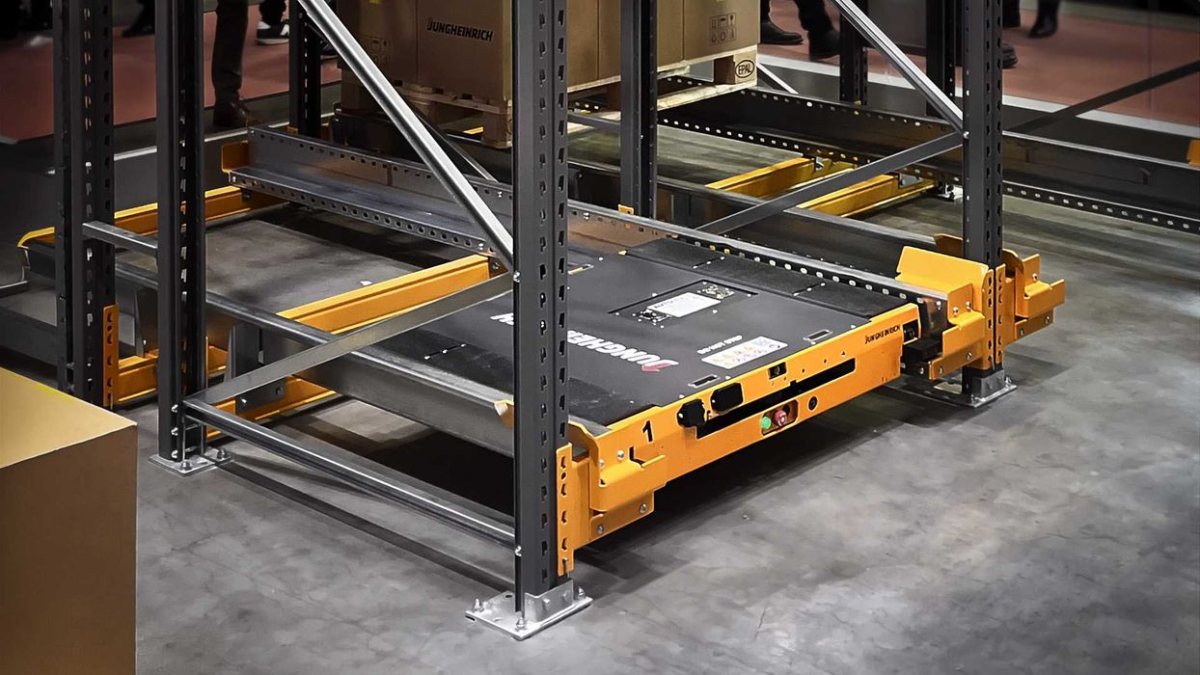
Material handling equipment provider Jungheinrich has entered into a strategic partnership with intralogistics specialist Automha, saying the two companies have developed a two-way pallet shuttle for high-density pallet storage.
According to the partners, their "UP-Carrier GTJ" product solution combines Italy-based Automha's shuttle expertise with Germany-based Jungheinrich's strengths in system integration, software, and lifecycle services. The solution is already deployed in more than 200 projects across over 25 countries.
Jungheinrich says that shuttle systems are becoming increasingly important because they address a collection of growing industry challenges. Specifically, many companies face the challenge of increasing material flow performance without fundamentally modifying existing buildings or infrastructure. And at the same time, requirements for space utilization, productivity, and process reliability continue to grow.
According to Jungheinrich and Automha, their new solution has been developed as an entry point into warehouse automation. It can be integrated into existing warehouse environments and increases storage density without requiring major structural changes. Initially, pallet transport continues to be handled by industrial trucks. But as operational requirements evolve and automation levels increase, transport processes can subsequently be automated. This creates a clear migration path from manually supported operations to a fully automated material flow, they say.
This story was originally published by DC Velocity. Read the full story at DC Velocity →

Conversation