
Lack of trust is holding back the adoption of AI in supply chains
Despite all the hype surrounding artificial intelligence, the actual adoption of AI in supply chains is still proceeding at a...
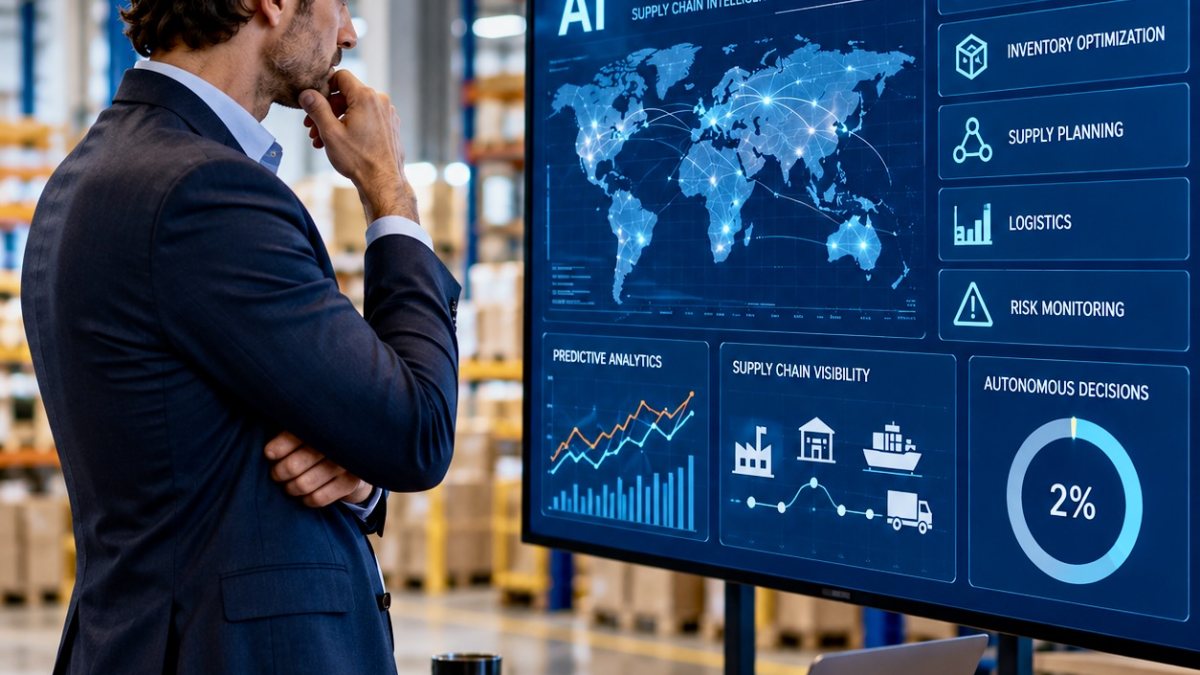
Despite all the hype surrounding artificial intelligence, the actual adoption of AI in supply chains is still proceeding at a strikingly slow pace. Only 2 per cent of companies have AI applications that operate fully autonomously. A lack of trust is the biggest barrier, followed by insufficient data quality and a lack of clarity regarding responsibilities. This is according to international research by the analyst firm IDC, commissioned by supply chain software provider Kinaxis, involving 2,176 supply chain leaders.
AI is now being used on a large scale in supply chain processes, but the move towards autonomous decision-making is proving difficult. According to the report ‘Making supply chain AI accountable’, 56 per cent of companies use artificial intelligence for co-pilot-style applications. A further 54 per cent use it for predictive analytics. For 50 per cent, AI supports automated replenishment and planning, whilst 46 per cent use it to detect and filter out exceptions.
Fully autonomous decision-making, however, is rare. Only 2 per cent of respondents state that their organisation has fully autonomous AI capabilities. At the same time, 40 per cent do expect the supply chain to operate largely autonomously within two years. According to IDC, this gap between ambition and reality is a major challenge for supply chain directors.
The biggest obstacle to further adoption appears to be not the technology itself, but trust in AI-driven decisions. Of the respondents, 52 per cent cite trust as the main barrier to faster adoption. Users want to understand why AI recommends a particular decision, what data was used to reach that decision, and when human intervention is necessary.
This story was originally published by Supply Chain Movement. Read the full story at Supply Chain Movement →



Conversation