
Massive Attack on Russian Shipping in Benghazi
The Russian Navy's Steregushchiy-class corvette RFS Merkury (F535) has from all appearances suffered a catastrophic explosion, having been attacked in...
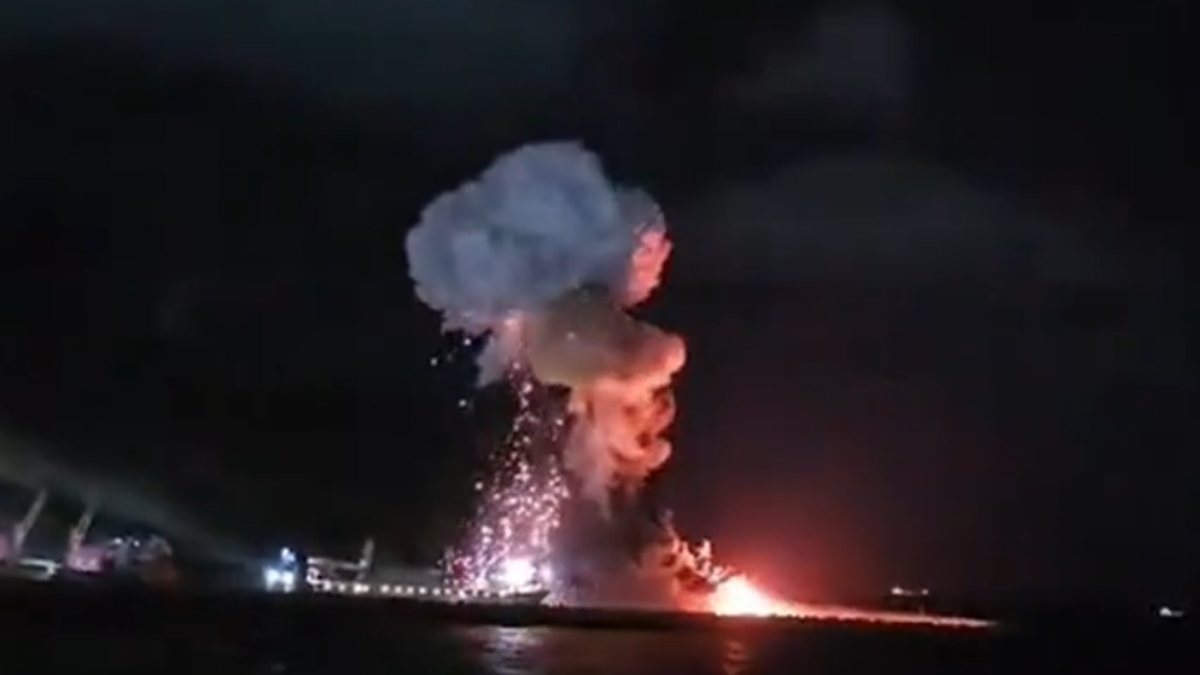
The Russian Navy's Steregushchiy-class corvette RFS Merkury (F535) has from all appearances suffered a catastrophic explosion, having been attacked in Benghazi harbor. There is no indication of a heat flare detected on the NASA FIRMS system, but video of the explosion appears to place the vessel on one of the outer walls of Benghazi harbor. Analysts with access to satellite imagery sources have confirmed having seen evidence of a massive explosion, with the ship seen submerged on its side several hours later.
In the video of the explosion, it appears that the explosion has initiated the launch of a number of missiles from the 12 vertical launch system cells with which Steregushchiy-class corvettes are equipped. The explosion also illuminated the profiles of two cargo ships further along the mole which were equipped with derrick cranes, as are the Russian military cargo vessels previously used to make deliveries to Mediterranean ports.
The attack is reported to have been carried out by up to six explosive-laden uncrewed surface vessels (USVs), and the size of the explosion would tend to confirm this.
After the attack on RFS Merkury, two cargo ships were also attacked, one of which has been identified as the sanctioned civilian-manned military cargo vessel Ascalon (IMO 9198226). Ascalon and Anastasiia (IMO 9349291) set off together on October 31 from Baltiysk in Kaliningrad, passed through the Strait of Gibraltar on the evening of November 13, and had been traveling dark without AIS since then. The second vessel reportedly attacked was Maltese-flagged, and it is possible the attackers believed this second ship was the Anastasiia.
This story was originally published by The Maritime Executive. Read the full story at The Maritime Executive →
Conversation