
Miami International Airport launches AI-powered cargo platform
The system aims to improve truck scheduling, reduce waiting times and cut annual carbon emissions by 5,900 US tons if adopted across the airport’s cargo operations.

Miami International Airport (MIA) has launched an AI-powered Airport Cargo Community System (ACCS), developed by Kalé Logistics, to improve cargo coordination, reduce congestion and cut carbon emissions. The launch was announced at The International Air Cargo Association’s (TIACA) Air Cargo Forum in Miami on 27 October.
The platform provides a shared online portal for freight forwarders, cargo handlers, truckers, carriers and ground handlers, reducing reliance on fragmented, manual information exchange. It is designed to improve information sharing, advance planning and truck scheduling, helping reduce waiting times and increase productivity across the airport’s cargo operations.
Cargo trucks currently arrive at MIA with limited information about their arrival times and cargo types, contributing to congestion, carbon emissions and operational inefficiencies. The new system is also intended to provide the digital infrastructure needed to connect MIA with international partner airports and facilitate the movement of goods along specific international trade lanes.
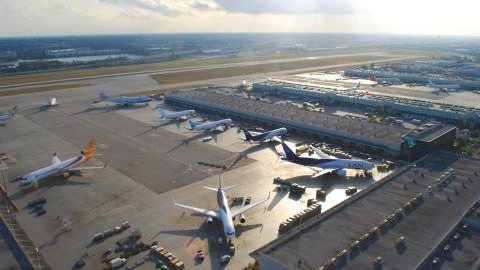
MIA handled a record 3.4 million US tons of freight in 2025, making it the busiest freight airport in the US and the third busiest in the world, after Hong Kong and Shanghai. Its cargo operations require an average of 190 cargo-only flights and more than 1,600 truck trips daily.
This story was originally published by STAT Times. Read the full story at STAT Times →

Conversation