
Peak season, disrupted skies and a Central Asian long shot
The Middle East conflict is testing Central Asia’s potential as an alternative Asia–Europe cargo corridor, but capacity, cost and reliability remain key hurdles.
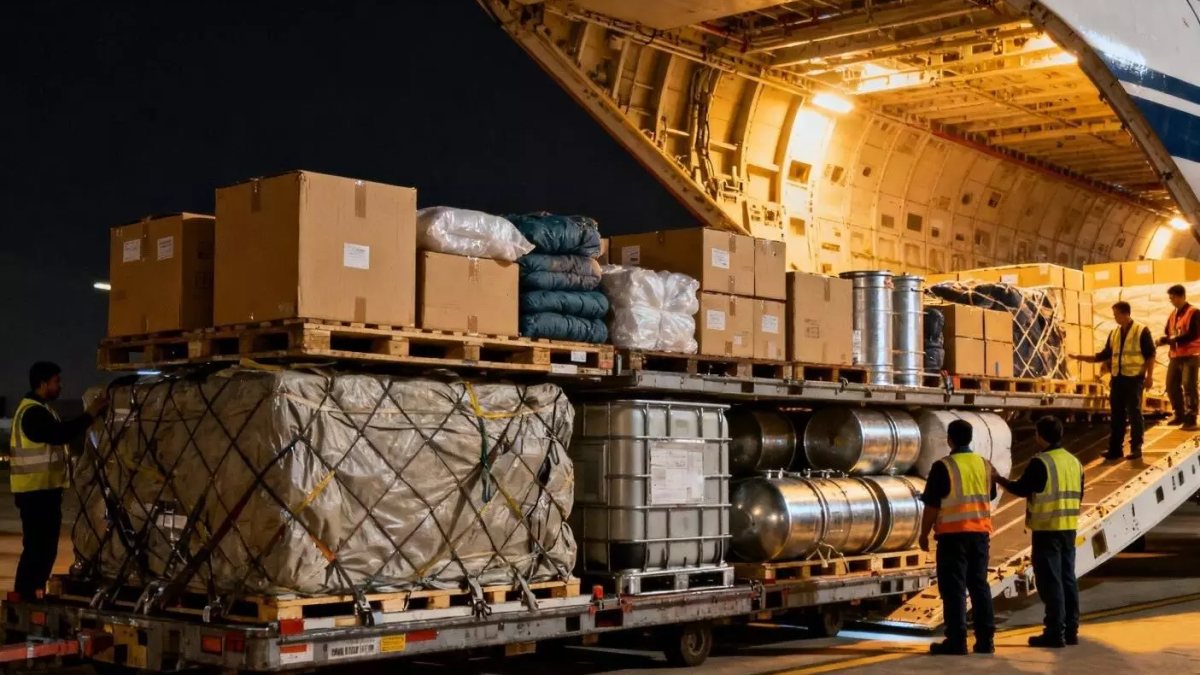
Picture a pallet of electronics in Zhengzhou, due in Europe before Christmas. In an ordinary year, the forwarder books it on the quickest route and moves on. This year, every route comes with a catch.
The air is expensive. Jet fuel costs more than double what it did a year ago, and the BAI00 global index is up 26.4%. The sea is slower, and still finding its way back to Suez. The Gulf hubs that once stitched Asia to Europe are running below full strength after months of war. And a handful of airports in Central Asia are telling anyone who will listen that they can be the way round.
Can they? That is the question hanging over this peak season, and it is harder to answer than the pitch suggests. The answer sits at the end of a chain: a peak that is strong but oddly shaped, a Middle East network that is repaired but not whole, and a corridor in Central Asia that has ambition and is still hunting for proof. Follow the pallet, and each link either tightens or snaps.
A peak with an odd shape The first surprise is the peak itself. Neil Wilson, Editor at TAC Index, says the usual spike ahead of Thanksgiving in the US and Christmas in Europe has barely begun, and prices are already ahead of the last two seasons. “Overall rates, as per the BAI00 global index, are already above the previous two peak seasons,” says Wilson. A rush like that would normally mean demand is flooding everywhere. It is not.
This story was originally published by STAT Times. Read the full story at STAT Times →

Conversation