
Poland weighs rail freight surcharge
Poland is considering implementing a surcharge for rail freight. A study commissioned by infrastructure manager PKP PLK concluded that a track access charge markup of…
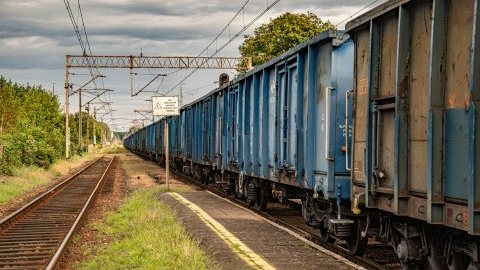
Poland is considering implementing a surcharge for rail freight. A study commissioned by infrastructure manager PKP PLK concluded that a track access charge markup of a couple of percentage points would not lead to a reverse modal shift. The Polish infrastructure manager PKP PLK is looking for ways to generate more income from track access charges (TACs). The EU and Poland allow the infrastructure manager to add a TAC mark-up to recover its full costs. However it is legally obliged to conduct a research to find out how many costs the market can carry without losing customers.
A study by SGH Warsaw School of Economics has now determined the maximum mark-up that PKP PLK can implement: 4.60 Polish złoty (€1.04) per train-kilometre. This should not lead to a loss of customers to the road sector, according to SGH.
The rate would apply to freight trains with a gross weight of 660 tonnes in the bulk and conventional segments. Intermodal would be exempt, because its demand is considered to be less rigid than in the former two. In other words, intermodal loses customers when TACs (and consequently, customer prices) rise.
Trains under 660 tonnes should be exempt from the surcharge, according to the SGH study. The goal is to protect small, dispersed or new flows. These are areas where rail competes weakest against trucks. Over 660 tonnes, all bulk and conventional freight trains should be treated the same in the SGH model. The charge is applied per train-kilometre in order to prevent penalising heavier and longer trains.
This story was originally published by RailFreight.com. Read the full story at RailFreight.com →



Conversation