
Port of Gothenburg to electrify last mile into container terminal
The Port of Gothenburg has announced it will electrify the last-mile track into its container terminal, removing the need for diesel locomotives on the final…
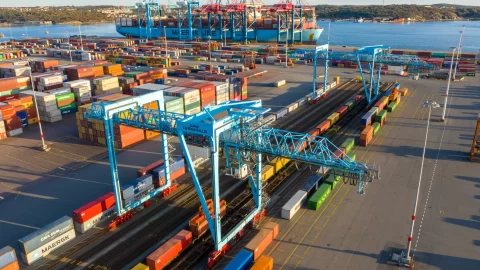
The Port of Gothenburg has announced it will electrify the last-mile track into its container terminal, removing the need for diesel locomotives on the final stretch at Scandinavia’s largest port. Construction is due to start in 2027.
According to the port authority, the investment will cut total turnaround times for container shuttles by up to 30 minutes, as trains will be able to depart directly from the terminal instead of spending time in the departure yard.
The port, which handles around 20% of Sweden’s trade and more than half of its container traffic, added that the project would also allow longer trains. Train length is currently limited by the 630-metre tracks in the departure yard, and the new set-up will improve conditions for trains of up to 750 metres.
At present, there is no overhead line on the terminal tracks, so the last mile needs either a diesel locomotive or a detour via the departure yard. Once the wires are up, operators will gradually be able to run their own electric locomotives into the terminal, taking over from the port’s compulsory shunting service. Trains can then leave straight from the terminal’s handling tracks, which total 2,250 metres, enough for three full-length trains, instead of going via the yard. The port says this will also reduce shunting, free up capacity in the yard and lower emissions.
This story was originally published by RailFreight.com. Read the full story at RailFreight.com →

Conversation