
Rail Traffic SURGE: Why Intermodal Volume is Climbing
The latest weekly rail traffic numbers show a significant intermodal volume surge, propelled by high diesel fuel prices and tight truck capacity, causing shippers to divert freight to rail. Get insights into North American…

The latest weekly rail traffic numbers show a significant intermodal volume surge, propelled by high diesel fuel prices and tight truck capacity, causing shippers to divert freight to rail. Get insights into North American carloads, key commodity segments, and upcoming Class I railroad earnings reports that will shed more light on these trends.
U.S. intermodal volume surged 12.6% year-over-year in week 41, the Association of American Railroads reported Wednesday, as sustained high diesel prices and tight truck capacity accelerated a road-to-rail freight shift. Overall U.S. rail traffic rose 8.5% for the week, well above the 5.5% average pace recorded over the prior four weeks, while North American intermodal climbed 10.8% and total North American rail traffic gained 7.2%.
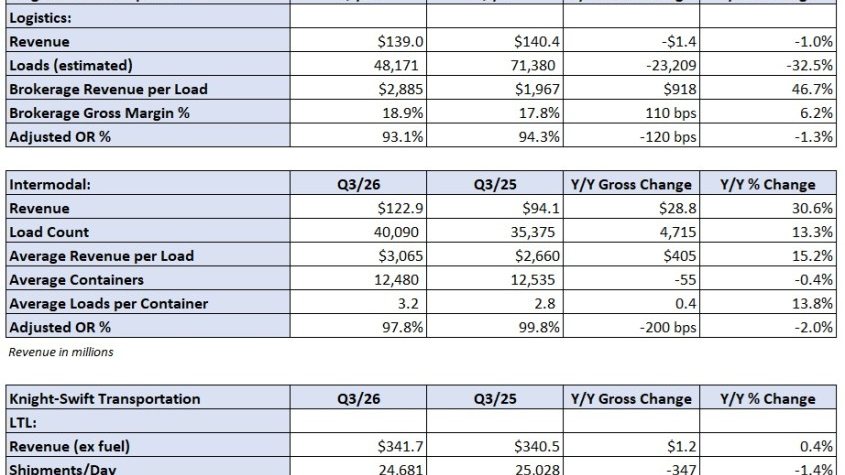
The intermodal acceleration is building on consecutive weeks of double-digit gains — the prior week came in around 10% to 11% — and is creating downstream pressure on drayage capacity. JB Hunt flagged the strain on its earnings call, noting difficulty attracting enough drayage drivers to move containers to and from intermodal terminals, a signal that the volume surge is testing last-mile infrastructure.
This story was originally published by FreightWaves. Read the full story at FreightWaves →

Conversation