
Renfe updates safety protocol as investigators analyse Urda collision
SPAIN: Renfe has introduced a new safety directive for high speed operations, requiring trains to halt and proceed at a maximum speed of 40 km/h under visual supervision after cab signalling failures. The decision…
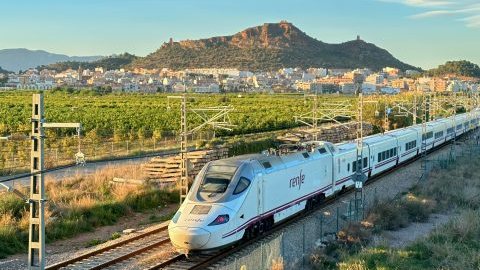
SPAIN: Renfe has introduced a new safety directive for high speed operations, requiring trains to halt and proceed at a maximum speed of 40 km/h under visual supervision after cab signalling failures. The decision follows the fatal Urda collision that killed at least 69 people.
Most Spanish high speed lines are equipped with cab signalling, using either LZB or ETCS. Lineside signals and transponders are provided as a fallback, but these are widely spaced to protect the technical stations, crossovers and refuge loops at intervals of 40 km or more. In the event of a signal failure, trains can continue operating using the fallback system, designated as BSL (Bloqueo de Señalización Lateral), but capacity is reduced by the extended block sections. The line is also equipped with ASFA Digital, which is installed on all high speed lines as an overlay to ERTMS.
If LZB fails, BSL is activated, and if that fails, ASFA AV is used. LZB permits operation at speeds up to 300 km/h. Trains are limited to 250 km/h under BSL and 200 km/h using ASFA AV. Should all three systems fail simultaneously, then control of trains is handled verbally by the control centre. If there is any uncertainty, ‘marcha a vista’ (drive on sight) is ordered, at a maximum of 40 km/h.
This story was originally published by Railway Gazette. Read the full story at Railway Gazette →

Conversation