
Smaller forwarders struggle to secure alternative terms under IATA air waybill rules
Some airlines are agreeing alternative liability terms with larger freight forwarders under IATA’s revised direct air waybill (DAWB) framework, but smaller firms have little leverage to secure similar arrangements, the Airforwarders Association (AfA) has…
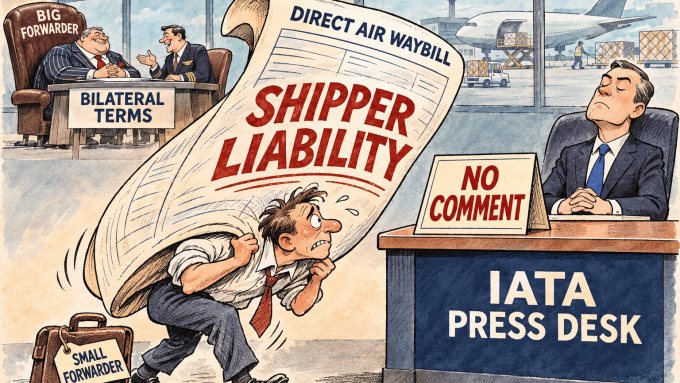
Some airlines are agreeing alternative liability terms with larger freight forwarders under IATA’s revised direct air waybill (DAWB) framework, but smaller firms have little leverage to secure similar arrangements, the Airforwarders Association (AfA) has warned.
“If an airline says no, the forwarder either accepts the default terms or moves the cargo to another carrier,” AfA chief executive Steve Smith told The Loadstar.
“A global standard shouldn’t only work for companies big enough to negotiate their way out of it.”
Under the framework, effective since 1 July, a forwarder tendering cargo as agent for a shipper named on the airline’s air waybill assumes the shipper obligations that would apply if it were shipping in its own name, unless it agrees alternative bilateral terms with the carrier.
This story was originally published by The Loadstar. Read the full story at The Loadstar →



Conversation