
South Poland Terminal in Zabrze plans new intermodal connections to Germany, Spain and Italy.
South Poland Terminal in the Polish city of Zabrze is preparing to expand its international rail freight network by introducing new routes to Western and Southern Europe. The planned services…
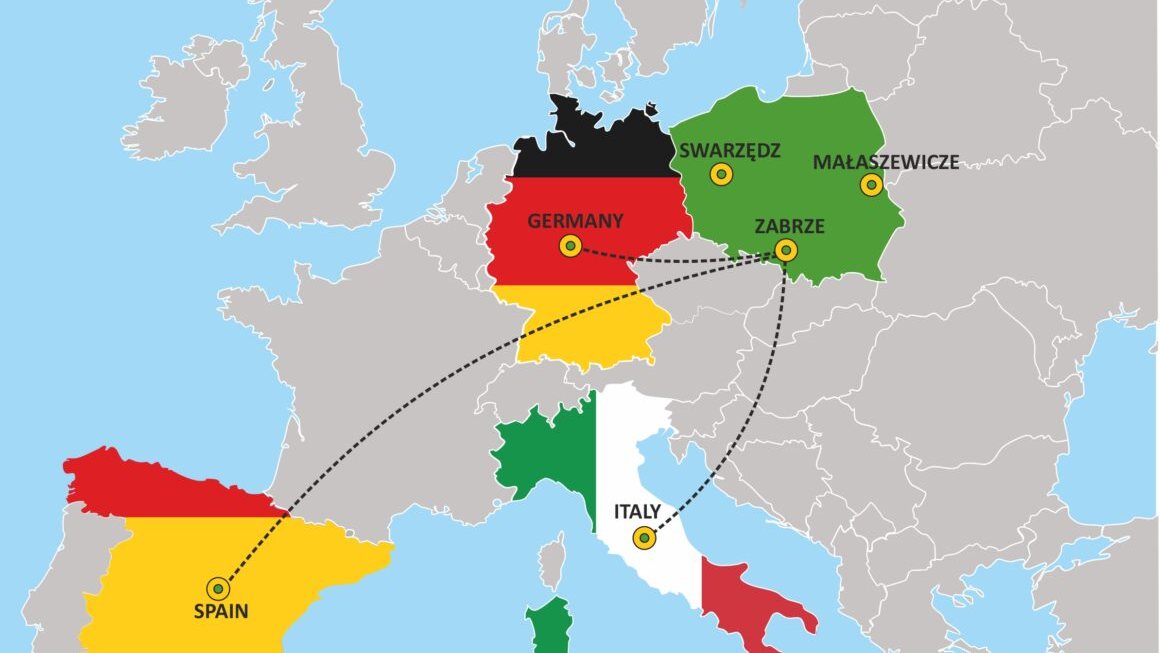
South Poland Terminal in the Polish city of Zabrze is preparing to expand its international rail freight network by introducing new routes to Western and Southern Europe. The planned services will connect the industrial region of Silesia with key markets in Germany, Spain and Italy, providing additional freight transport options for businesses across southern Poland. Built on the site of the former Makoszowy coal mine, the terminal integrates rail and road infrastructure and is designed to support international intermodal freight flows.
South Poland Terminal Zabrze is equipped to handle shipping containers, intermodal semi-trailers and swap bodies, as well as conventional road trailers. Its infrastructure includes 750-metre handling tracks and a dedicated Terminal Operating System (TOS). These facilities provide a foundation for expanding transport services, establishing new international connections and integrating the terminal into European logistics networks.
The development of new routes from Zabrze also aims to increase the share of rail transport in long-distance freight operations and reduce reliance on road haulage over extended distances. Road transport will continue to play an essential role in first- and last-mile deliveries. In addition, the deployment of modern electric tractor units is expected to help reduce carbon emissions from road transport operations. The expansion of the intermodal network is intended to improve access to transport solutions for businesses in southern Poland while supporting the decarbonisation of international freight transport.
Source: https://clip-group.com/en/home/
The post South Poland Terminal in Zabrze plans new intermodal connections to Germany, Spain and Italy. appeared first on Transport Corridors.
This story was originally published by TransportCorridors. Read the full story at TransportCorridors →
Conversation