
The Rare Earth Disconnect Is Becoming a Logistics and Manufacturing Problem
Rare-earth supply risk extends beyond mines. Export permissions, processing, magnet qualifications and production dependencies determine real manufacturing.
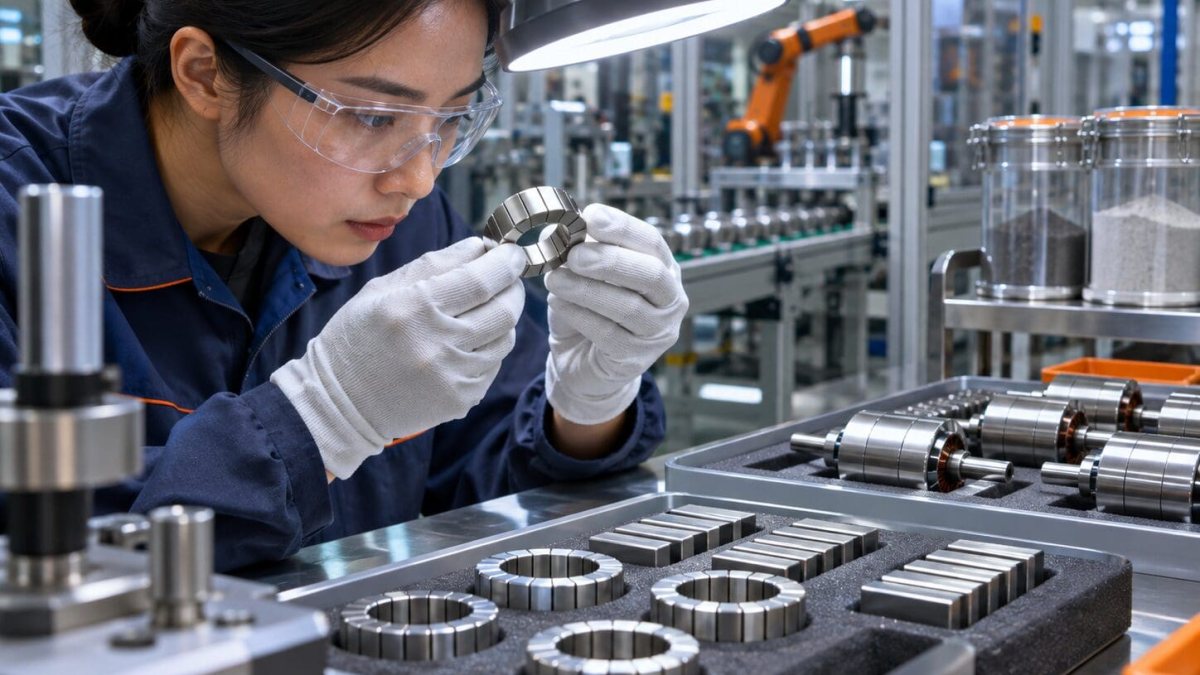
The rare-earth debate is usually presented as a question of mineral abundance or geopolitical control. For a manufacturer, the more immediate exposure is the availability of qualified material in the required chemical or physical form, at the right production stage, under a workable export authorization. A mine opening, an ETF changing direction and a shipment of finished magnets becoming available are entirely different events. Supply chain executives should not use any one of them as a proxy for the others.
For logistics and manufacturing executives, the more important question is not whether mining stocks have found a bottom. It is whether the industrial system can reliably deliver the specific materials, processed forms, and finished components required to keep production lines operating. That is a substantially more difficult problem than the movement of raw minerals from one country to another.
Rare earth supply chains involve a succession of technically demanding operations: mining, concentration, chemical separation, refining, metal and alloy production, and, for many applications, magnet manufacturing. Each stage has its own capital requirements, process expertise, environmental constraints, and qualification standards. Adding mining capacity does not automatically create an alternative source of usable material.
A Congressional Research Service assessment, updated in June 2026, estimated that China accounts for approximately 60 percent of global rare earth mining, roughly 90 percent of processing and separation, and about 94 percent of rare-earth-based magnet manufacturing. The gap between mining and downstream production is central to the logistics problem. Even material mined outside China may still depend on Chinese processing before it can enter an industrial supply chain.
This story was originally published by Logistics Viewpoints. Read the full story at Logistics Viewpoints →
Conversation