
The Retail Store Is Becoming a Showroom. Logistics Has to Do the Rest.
The retail store can sell without stocking every product, but that shifts the economics of the transaction to inventory, warehousing, transportation, and delivery.
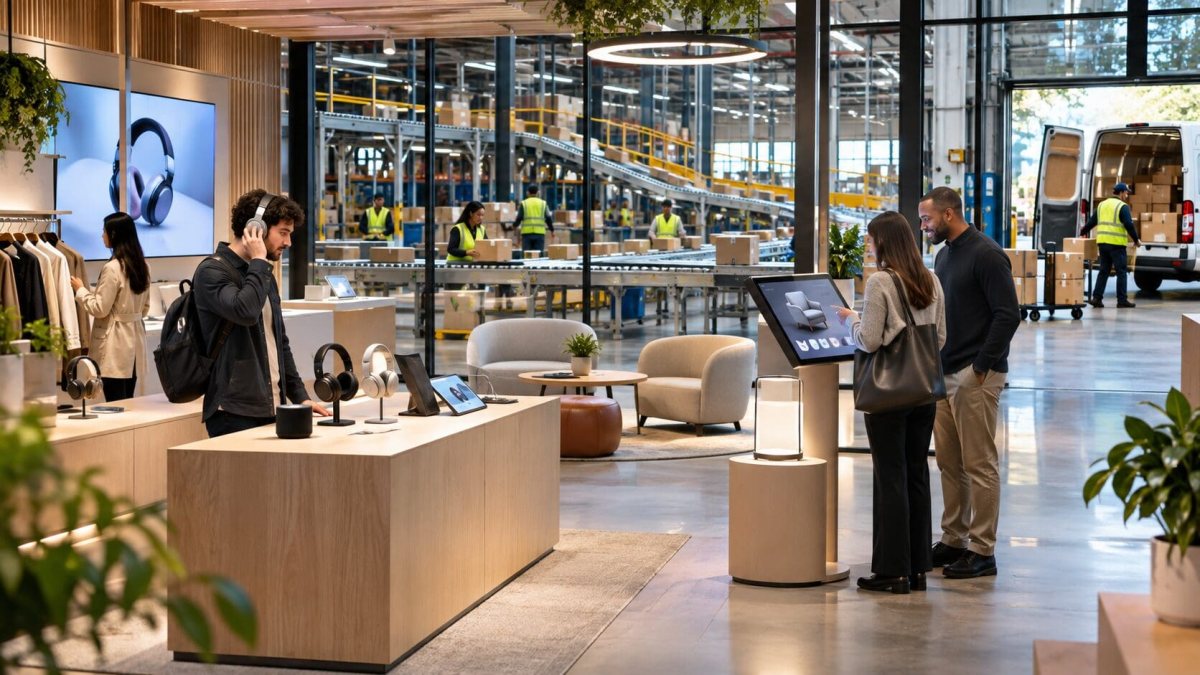
A customer walks into a furniture store, sits on a sofa, examines the fabric, and spends half an hour discussing options with a salesperson. The customer places an order. Then the salesperson explains that the sofa will arrive next Thursday from a distribution center 200 miles away.
Was that a retail transaction or a logistics transaction? It was both. And increasingly, that distinction matters more than whether the sale originated in a store or online.
For much of retail history, the store displayed the product, stocked the product, and transferred it to the customer. Those functions were bundled because they had to be. Today they can be separated. A store can help customers make decisions without holding every item it sells. But removing inventory from the sales floor does not remove the work associated with fulfilling the sale. It transfers that work to the distribution network.
This is one of the more consequential shifts in retail logistics. It is also easy to misunderstand. The opportunity is not simply to shrink stores and stock fewer goods. The opportunity is to assign different jobs to different facilities, then manage them as one operating system.
This story was originally published by Logistics Viewpoints. Read the full story at Logistics Viewpoints →

Conversation